
Gold Price Outlook Weakens as Higher Interest Rate Expectations Weigh on Bullion
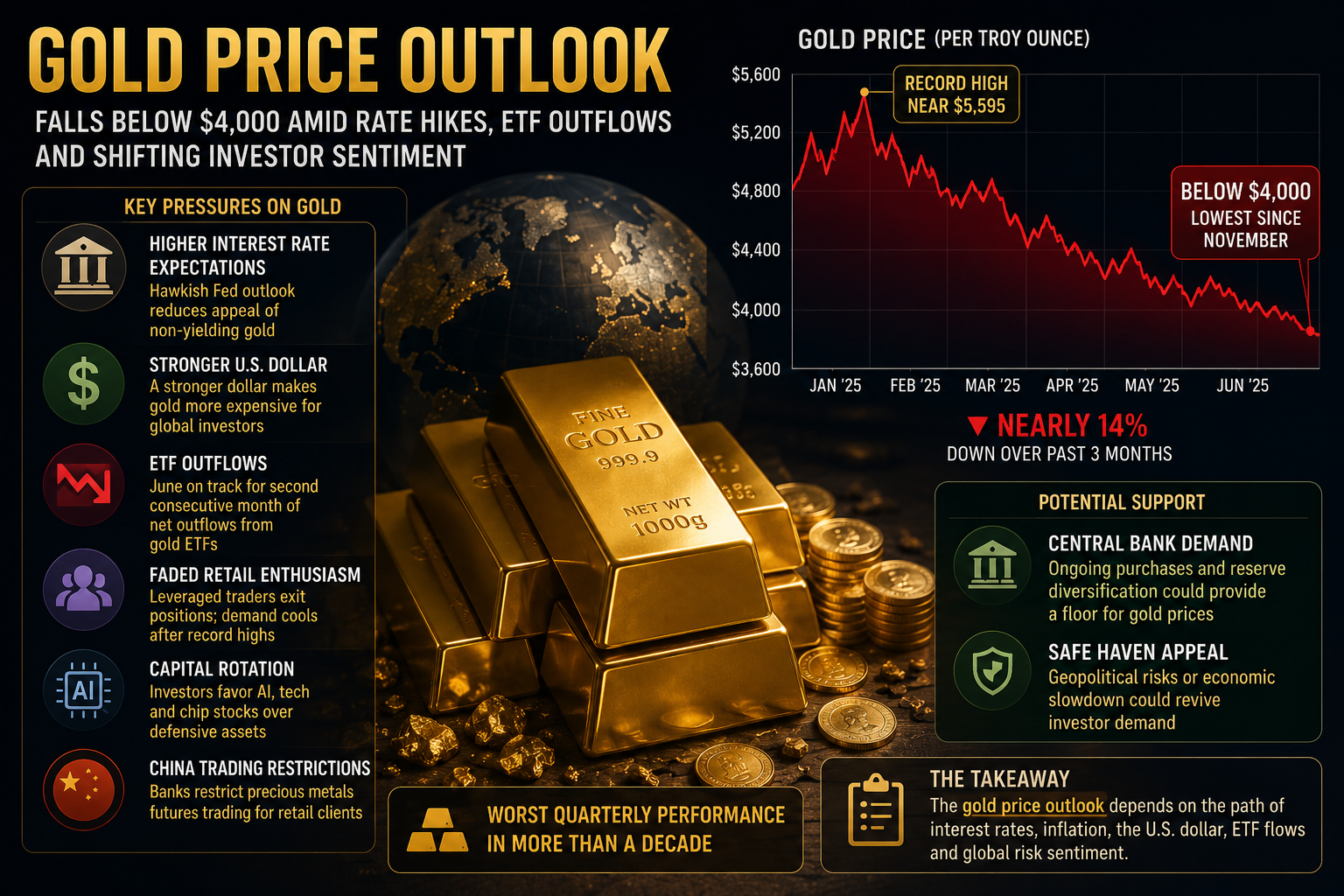
The gold price outlook has turned sharply more cautious after bullion fell below $4,000 per troy ounce, marking its weakest level since November and putting the precious metal on course for its worst quarterly performance in more than a decade.
Gold briefly traded below $3,943 before recovering modestly, but the metal remains down nearly 14% over the past three months. The decline comes after an extraordinary rally that carried gold to a record high of almost $5,595 per ounce in January.
Investors are now reassessing the outlook as expectations for higher U.S. interest rates, a stronger dollar and shifting market sentiment reduce demand for the traditional safe-haven asset.
Gold Price Outlook
Higher Interest Rates Pressure Gold
The biggest driver behind the changing gold price outlook is the market’s expectation that Federal Reserve Chair Kevin Warsh will maintain a hawkish stance to combat inflation.
Higher interest rates typically reduce the appeal of gold because the metal does not generate income. As bond yields rise, investors can earn better returns from interest-bearing assets such as U.S. Treasuries, making non-yielding assets like gold relatively less attractive.
That shift in expectations has prompted many traders to reduce their exposure after two years of exceptionally strong gains.
Retail Enthusiasm Has Faded
Earlier this year, retail investors helped fuel gold’s surge to record highs. Much of that speculative demand has now reversed.
As geopolitical tensions in the Middle East pushed oil prices higher and inflation concerns resurfaced, investors initially sought safety in gold. However, expectations that higher inflation would lead to tighter monetary policy eventually overwhelmed the safe-haven trade.
Many leveraged investors have since exited their positions, accelerating the decline in bullion prices.
Capital Is Flowing Into AI Instead
Another important factor affecting the gold price outlook is changing investor preference.
Rather than allocating fresh capital to precious metals, many investors have shifted toward artificial intelligence, semiconductor companies and high-growth technology stocks. The excitement surrounding AI infrastructure spending and major technology listings has drawn investment away from defensive assets like gold.
This rotation illustrates how capital often moves between growth assets and traditional stores of value depending on market sentiment and interest rate expectations.
ETF Outflows Add Selling Pressure
Investment demand has also weakened through exchange-traded funds. Gold-backed ETFs are on track for a second consecutive month of net outflows, according to data from the World Gold Council.
At the same time, several Chinese banks have introduced restrictions on precious metals futures trading for retail clients in response to regulatory concerns about speculative activity.
Although investors in China can still purchase physical gold bars and coins, the tighter rules have reduced speculative demand in one of the world’s largest gold markets.
Central Banks Could Provide Support
Despite the recent weakness, not all of the news is negative. Analysts note that central bank purchases continue to provide an important source of long-term demand.
Many central banks have steadily increased their gold reserves over recent years as part of broader reserve diversification strategies. That institutional buying could help establish a floor under prices if private investment demand remains subdued.
Trading Implications
For traders, the gold price outlook remains closely tied to interest rates, inflation expectations and the U.S. dollar.
If inflation remains elevated and the Federal Reserve continues tightening monetary policy, gold may struggle to regain upward momentum. Conversely, any signs of slowing economic growth, lower inflation or future rate cuts could quickly revive investor demand for bullion.
Traders should also monitor ETF flows, central bank purchases and shifts in global risk sentiment, as each has become an increasingly important driver of gold prices.
The Bottom Line
The gold price outlook has weakened significantly as higher interest rate expectations, ETF outflows and investor enthusiasm for AI-related assets replace the speculative buying that fueled gold’s record rally earlier this year.
While central bank demand may help support prices over the longer term, gold’s near-term direction is likely to depend on the path of inflation, Federal Reserve policy and whether investors continue favoring growth opportunities over traditional safe havens.