
Hertz Convertible Bonds Highlight the Rental Car Giant’s Fight for Survival
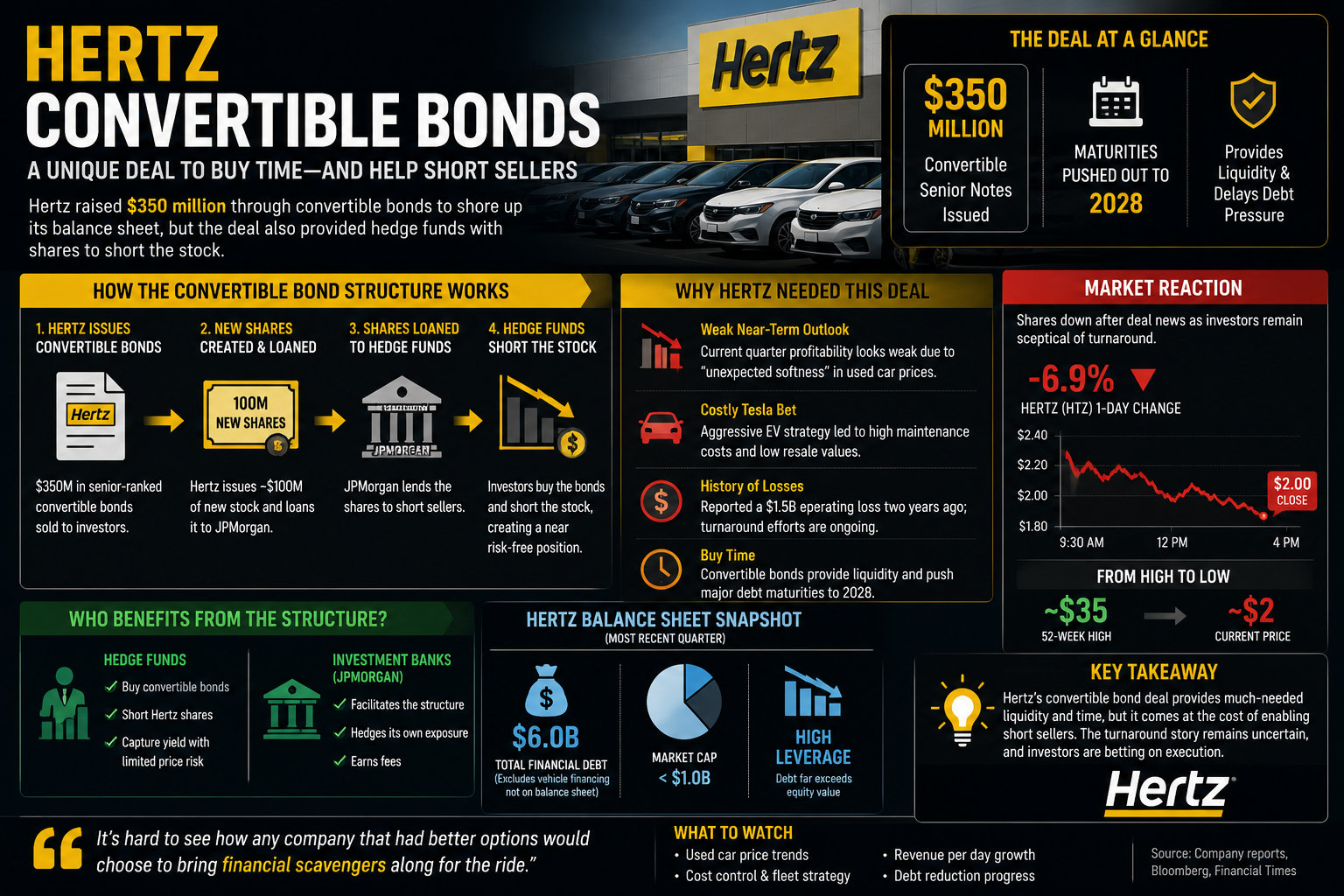
Hertz convertible bonds are at the center of the company’s latest effort to stabilize its finances as the rental car giant continues to recover from years of operational and strategic challenges. By issuing $350 million in convertible senior notes, Hertz has bought itself valuable time—but at the cost of giving hedge funds an opportunity to bet against its stock.
The financing underscores the difficult position facing the company. While management believes its turnaround is gaining traction, investors remain skeptical after a series of costly missteps, including its high-profile investment in Tesla vehicles.
Why Convertible Bonds Matter
Convertible bonds are a hybrid security that combines features of traditional debt with the option to convert into company stock at a future date. They typically offer lower interest rates than conventional bonds because investors receive the added benefit of potential equity upside.
However, many buyers of convertible debt are specialized hedge funds that simultaneously short the company’s shares. This strategy allows them to profit from the bond’s pricing characteristics while reducing exposure to movements in the underlying stock price.
For Hertz, issuing Hertz convertible bonds required an unusual additional step.
Creating Shares for Short Sellers
Unlike many companies, Hertz has relatively few freely traded shares, and a significant portion of those shares are already sold short. That scarcity makes borrowing stock expensive for hedge funds seeking to establish hedged positions.
To facilitate the convertible bond offering, Hertz issued approximately $100 million of new shares and loaned them to JPMorgan. The bank then made those shares available to hedge funds participating in the transaction.
While Hertz did not receive proceeds from issuing those shares, the arrangement helped complete the financing by allowing investors to implement their preferred hedging strategies.
The transaction illustrates just how important the Hertz convertible bonds offering was to the company’s broader refinancing efforts.
Financial Challenges Continue
Although rental demand has improved, Hertz continues to face significant financial headwinds.
The company recently warned that profitability during the current quarter would likely be weaker than expected. While revenue per rental day has remained relatively healthy, management cited unexpected weakness in used vehicle prices.
That matters because rental car companies depend heavily on the resale value of their fleets. Lower used car prices increase depreciation expenses and reduce profits when vehicles are sold.
The Tesla Bet Still Haunts Hertz
One of Hertz’s biggest strategic mistakes remains its aggressive expansion into Tesla electric vehicles.
The initiative, championed by controlling shareholder Knighthead Capital, was initially viewed as a bold move toward fleet electrification. Instead, it produced higher-than-expected maintenance costs and disappointing resale values.
The company ultimately reported an operating loss of approximately $1.5 billion two years ago, with the Tesla fleet contributing significantly to those financial pressures.
Management says operational improvements are beginning to reduce costs, but investor confidence has yet to recover.
Debt Remains the Biggest Concern
The new Hertz convertible bonds help push major debt maturities out until 2028, reducing immediate refinancing pressure.
Even so, Hertz’s balance sheet remains highly leveraged.
As of its most recent quarter, the company reported:
- Approximately $6 billion of financial debt (excluding vehicle financing)
- Less than $1 billion in market capitalization
- A stock price near $2 per share, down dramatically from roughly $35
Those figures highlight why equity investors remain cautious despite management’s optimistic outlook.
Trading Implications
From a trading perspective, convertible bond offerings often create additional pressure on a company’s stock.
Because hedge funds frequently hedge their convertible positions by short selling shares, the transaction itself can increase short interest and weigh on near-term price performance.
However, the financing also removes immediate liquidity concerns, which may reduce bankruptcy risk and provide management with additional time to execute its turnaround strategy.
Investors will likely focus on several key variables over the coming quarters:
- Used vehicle pricing trends
- Fleet depreciation expenses
- Rental pricing and demand
- Debt reduction progress
- Free cash flow generation
Bottom Line
Hertz convertible bonds represent both an opportunity and a warning.
On one hand, the financing strengthens the company’s liquidity and delays significant debt maturities until 2028. On the other, the unusual structure—requiring new shares to facilitate hedge fund short selling—illustrates just how limited Hertz’s financing options have become.
The turnaround story is still alive, but investors remain unconvinced. Until Hertz can consistently improve profitability, reduce leverage, and demonstrate that its fleet strategy is working, the stock is likely to remain volatile.
For traders, Hertz remains a company where balance sheet developments may prove just as important as earnings reports in determining the next major move.