
Markets Caught Between AI Optimism and Liquidity Stress
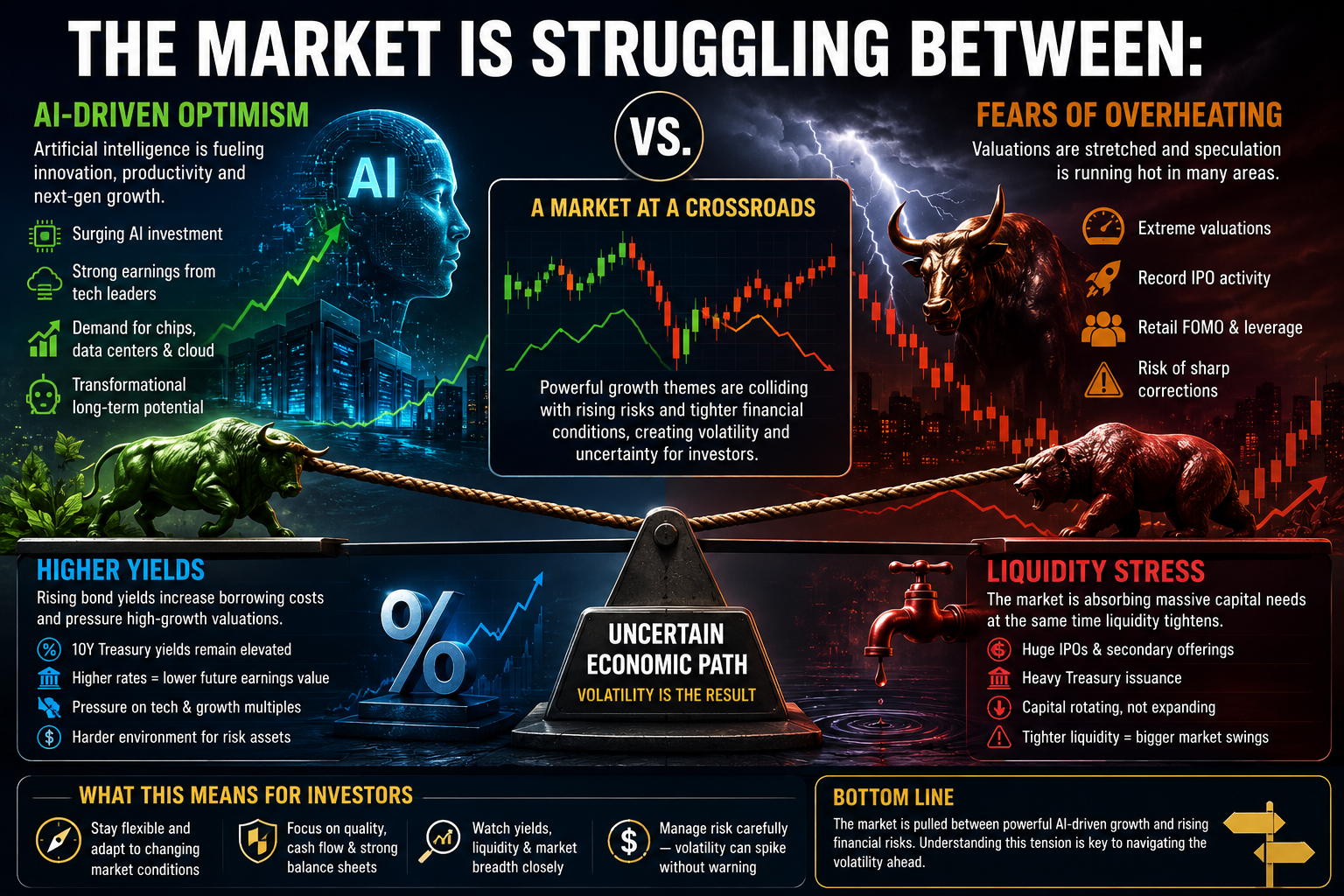
The stock market is entering one of the most psychologically difficult environments traders have faced in years. On one side stands enormous optimism surrounding artificial intelligence, technological transformation, and explosive corporate growth potential. On the other side are rising fears that markets may be overheating just as higher bond yields and tighter liquidity begin to pressure valuations.
That conflict is creating what many traders are now experiencing as growing market liquidity stress.
The result has been increasingly violent rotations beneath the market’s surface. One day, investors aggressively buy AI infrastructure, semiconductor, and cloud computing names. The next day, those same stocks experience sharp reversals as institutions raise cash, reduce risk, or reposition for new IPOs and capital raises.
The AI Boom Is Still Real
Despite the volatility, the underlying AI growth story remains powerful.
Global demand for semiconductors, servers, data centers, networking equipment, and AI compute infrastructure continues to expand rapidly. Corporate spending on artificial intelligence has accelerated worldwide, as governments and businesses race to build the next generation of computing power.
That optimism continues driving massive investor interest in:
- Semiconductor stocks
- Cloud infrastructure companies
- Data center operators
- AI software firms
- Energy and power suppliers
The enthusiasm is understandable. Investors believe AI may become one of the largest technological shifts since the internet itself.
But even transformative technologies can experience dangerous periods of speculation.
Fears of Overheating Are Growing
As valuations continue climbing, many investors are beginning to ask whether markets have moved too far, too fast.
Several warning signs have started appearing simultaneously:
- Extreme valuations in AI-related companies
- Massive IPO activity
- Aggressive retail speculation
- Heavy leverage in momentum trades
- Rapid concentration into a small group of technology leaders
Historically, periods of intense investor enthusiasm often coincide with expanding equity issuance. Companies and insiders naturally seek to raise capital when valuations are elevated and investor demand is strong.
That is exactly what markets are seeing now with enormous planned IPOs from companies such as SpaceX, OpenAI, and Anthropic, combined with multibillion-dollar share sales from existing technology giants.
Those developments are increasing concerns about market liquidity stress as investors scramble to fund new opportunities.
Higher Yields Are Complicating Everything
At the same time, bond yields remain elevated as markets continue debating inflation, economic growth, and future Federal Reserve policy.
Higher yields pose a major challenge for richly valued growth stocks because future earnings are discounted at higher interest rates.
That tension is especially important in AI stocks, where many valuations depend heavily on long-term growth projections.
Even if AI demand remains strong, higher yields can pressure:
- Technology multiples
- Growth stock valuations
- Speculative momentum trades
- Risk appetite across the market
This creates a difficult environment in which strong fundamentals do not always translate into higher stock prices.
Liquidity Is Becoming the Real Story
Underneath the headlines, the most important issue may actually be liquidity.
The market is now attempting to absorb:
- Massive AI infrastructure spending
- Record IPO issuance
- Large secondary offerings
- Ongoing Treasury financing needs
- Elevated interest rates
That combination increases the risk of market liquidity stress, where there is simply not enough excess capital available to support every speculative theme simultaneously.
When liquidity tightens, markets often become more selective. Former leadership stocks can suddenly turn into funding sources as investors rotate into newer opportunities.
This may help explain the sharp and sometimes confusing reversals recently appearing in many AI-related stocks.
Why Volatility May Continue
Markets tend to become unstable when investors are simultaneously optimistic and fearful.
Right now, traders are trying to reconcile several competing narratives:
- AI may reshape the global economy
- Valuations may already reflect years of future growth
- Interest rates remain restrictive
- Liquidity may be tightening beneath the surface
That tension often produces violent intraday swings, failed breakouts, rapid sector rotations, and emotional trading behavior.
Periods of market liquidity stress also tend to amplify technical price moves, as smaller amounts of buying or selling pressure can trigger outsized market reactions.
Day Trading Implications
For active traders, this environment requires flexibility and discipline.
Markets driven by liquidity conditions can reverse quickly, even when news appears bullish. Traders should pay close attention to:
- Bond yield movements
- IPO-related capital rotations
- Volume patterns
- Failed momentum breakouts
- Intraday liquidity conditions
Risk management becomes especially important during periods of market liquidity stress because price action may become more emotional and less orderly.
Traders who remain patient, size appropriately, and avoid chasing momentum may have a significant advantage as volatility increases.
Bottom Line
The market is currently balancing between extraordinary technological optimism and growing financial pressure beneath the surface.
AI continues to drive real economic growth and corporate investment, but fears of overheating, elevated yields, and tightening liquidity are creating increasingly unstable trading conditions.
The next phase of this market may not simply be about earnings growth or innovation. It may be about which companies can continue attracting capital in an environment where liquidity is becoming more selective.
For traders and investors alike, understanding market liquidity stress may become just as important as understanding artificial intelligence itself.