
SpaceX Starship Reaches Orbit: The Next Test Is Turning Scale Into Profits
The SpaceX Starship first orbit milestone moves a major piece of the company’s growth strategy forward. On September 28, Starship reached orbit during its 14th test flight and deployed 26 Starlink V3 satellites. For investors, the commercial significance extends beyond the launch: SpaceX is working to expand the infrastructure that supports its satellite internet business.
Reaching orbit answers one development question. Whether Starship can launch frequently, return reliably, and deliver attractive economics remains the larger business test.
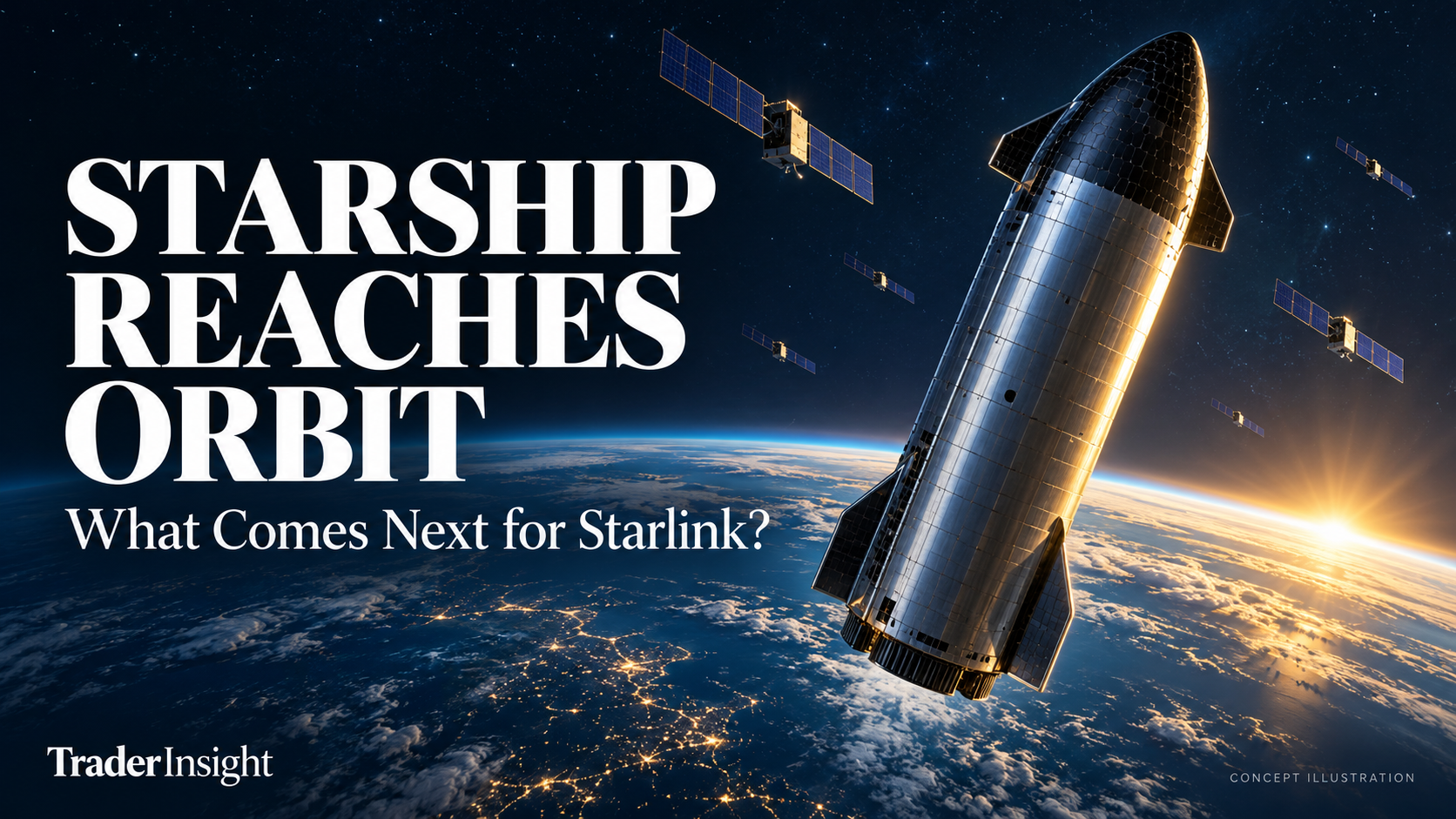
What Starship accomplished—and what remains unfinished
The mission lifted off from Starbase, Texas, at 7:48 a.m. local time. The Super Heavy booster completed a controlled ocean splashdown, while the upper stage reached orbit despite an engine problem during ascent.
SpaceX also successfully deployed its satellite payload. However, the company shortened the flight from its planned duration and brought the spacecraft back earlier than intended. Subsequent Space.com reporting said the ship reached the ocean intact before toppling over and exploding.
Those results deserve separate treatment. Orbital insertion and satellite deployment represent meaningful progress. They do not establish routine recovery and reuse of the complete system.
Why Starlink is the immediate business story
The supplied news report identifies SpaceX’s Connectivity business as its largest and only profitable segment in the second quarter. That makes the ability to expand Starlink a central financial issue, rather than simply another application for a larger rocket.
SpaceX says a fully loaded Starship could carry 60 V3 satellites. Monday’s deployment of 26 should therefore be understood as a development milestone, not evidence that the system has already reached its intended payload capacity or operating pace.
The potential business chain is straightforward: more usable network capacity could allow Starlink to serve additional demand and improve service in constrained areas. But installed capacity becomes valuable only when customers use it at prices that cover the costs of building, launching, and operating the network.
Investors should look for evidence of customer growth, service quality, capital efficiency, and cash generation alongside launch achievements. A bigger network does not automatically mean a proportionate improvement in profitability.
Reuse and launch frequency will determine the economics
Starship’s design aims to make both stages reusable. The financial benefit depends on how that reuse works in practice: recovery success, refurbishment requirements, turnaround time, and the number of flights each vehicle can complete.
A vehicle that can be recovered but requires extensive repairs has a different cost profile from one that can return to service quickly. Likewise, theoretical payload capacity matters less if launch intervals remain long or operational interruptions are frequent.
The next phase of the investment case therefore rests on repetition. Successive missions need to demonstrate that technical progress can become dependable operating performance.
Orbital AI adds opportunity—and another layer of uncertainty
According to the supplied report, SpaceX also intends to begin launching AI computing satellites in 2027. Starship could help support that ambition by transporting larger payloads.
For investors, however, a successful satellite deployment does not establish a profitable orbital computing business. Commercial demand, system performance, deployment costs, and ongoing operations would all require separate evidence. The AI opportunity should be evaluated as an additional development program, with its own milestones and spending requirements.
The TraderInsight perspective: assess the response to the news
A major milestone can strengthen a company’s narrative without telling a trader where the next price move will occur. Expectations may already reflect part of the achievement, and the market may focus on unresolved problems once the initial excitement fades.
Useful questions for a trading plan include whether the news produces sustained participation, whether price holds beyond an established range, and where a failed move would invalidate the setup. Those are observations to make from actual market data; this article does not establish a live entry signal or price target.
Explore how TraderInsight evaluates market catalysts and price behavior in the TraderInsight live stream.
Sources: News report supplied for this article, dated September 28, 2026; Space.com’s September 28 launch report. Business implications are TraderInsight analysis. Company targets are forward-looking and are not completed operating results.
For educational purposes only. Trading involves risk.