
Forgotten Profits Trade Setup Archive
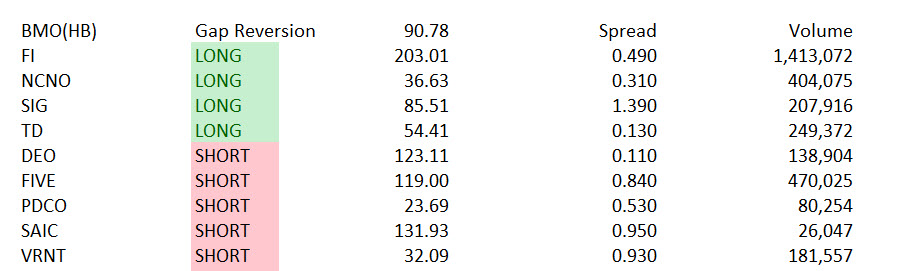
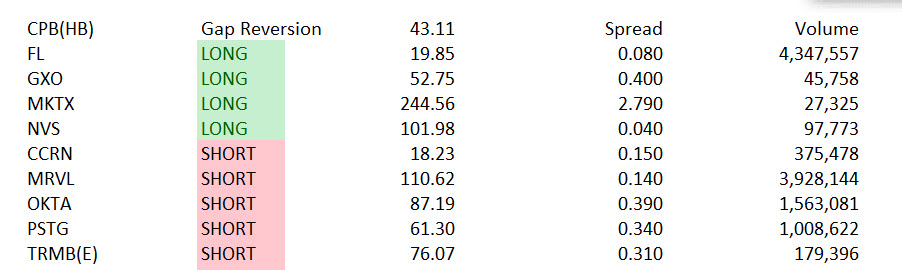
Below you'll find Ian's setups stacked up and ordered chronologically. As this service once resided at another home, the alerts only go back to mid July. For a full track record, see the portfolio.December 5, 2024
December 4, 2024
Risks of Trading New Cryptocurrencies
Wednesday’s Economic Reports Impact Markets
How Wednesday’s Economic Reports Impact Markets and Key Sectors
On Wednesday, several critical economic reports are set to be released, offering insights into the health of the U.S. economy. Wednesday’s economic reports impact markets significantly, as they cover employment, services, manufacturing, energy, and overall economic sentiment. Here’s a breakdown of the reports, their implications, and the likely market reactions.
1. ADP Non-Farm Employment Change
This report tracks the monthly change in private-sector employment. A higher-than-expected number signals strong job creation, boosting economic confidence but potentially raising concerns about inflationary pressure.
- Below Expectations: Markets may interpret this as a sign of slowing economic growth, likely benefiting bond prices and potentially putting pressure on equity markets.
- In-Line: Signals stability, likely causing little reaction.
- Exceeds Expectations: Suggests a robust labor market, which could push stocks higher but may also raise interest rate fears.
Affected Sectors:
- Financials (sensitive to interest rate expectations)
- Consumer Discretionary (dependent on employment strength)
2. Final Services PMI
The Final Services PMI gauges the health of the services sector, which forms a significant portion of the U.S. economy.
- Below Expectations: Indicates weakening demand in services, possibly leading to a pullback in consumer-focused sectors.
- In-Line: Suggests steady economic activity, likely causing minimal market movement.
- Exceeds Expectations: Points to strong services growth, boosting optimism in consumer-driven industries.
Affected Sectors:
- Consumer Discretionary
- Technology (due to consumer spending dynamics)
3. ISM Services PMI
The ISM Services PMI provides a more detailed view of services sector activity, including new orders and employment metrics.
- Below Expectations: May indicate broader economic slowing, potentially leading to a risk-off sentiment.
- In-Line: Signals a stable services sector with limited market reaction.
- Exceeds Expectations: Reflects robust growth, likely driving gains in equities, especially in service-oriented sectors.
Affected Sectors:
- Industrials
- Consumer Staples
4. Factory Orders
This measures the change in the total value of new purchase orders placed with manufacturers.
- Below Expectations: Could point to reduced manufacturing activity, pressuring industrial stocks.
- In-Line: Suggests stability in production.
- Exceeds Expectations: Signals strong demand, boosting manufacturing and related sectors.
Affected Sectors:
- Industrials
- Materials
5. Crude Oil Inventories
A weekly measure of crude oil stock levels, this report often influences energy prices.
- Below Expectations (Drawdown): Indicates increased demand, driving oil prices higher and benefiting energy stocks.
- In-Line: Likely to have minimal impact.
- Exceeds Expectations (Build): Suggests weaker demand, potentially pressuring oil prices and energy equities.
Affected Sectors:
- Energy
6. The Beige Book
This comprehensive report on economic conditions across Federal Reserve districts offers a qualitative assessment of economic health.
- Dovish Tone (Weak Conditions): May fuel speculation about rate cuts, boosting equities and bonds.
- Neutral Tone: Likely to have limited immediate impact.
- Hawkish Tone (Strong Conditions): Suggests the economy is resilient, potentially raising concerns about tighter monetary policy.
Affected Sectors:
- Financials
- Broad Market Indices
Market Reactions Overview
Market sensitivity to Wednesday’s economic reports will depend on how the data align with expectations and current sentiment. Employment and services reports will likely influence broader market indices, while oil inventories and factory orders could create sector-specific ripples.
Good Trading,
Adrian Manz
Past economic announcements:
Flash PMI
Construction Spending
Impact of South Korean Unrest on the World Financial Market
South Korean Unrest World Financial Market Impact
On December 3, 2024, South Korean President Yoon Suk Yeol declared martial law, citing threats from pro-North Korean elements and the need to protect the nation’s constitutional order. Concerns over South Korean unrest world financial market impact was everywhere, as this unexpected move led to significant unrest, with military forces attempting to enforce the decree and clashes erupting outside the National Assembly in Seoul. In response, the parliament convened an emergency session and voted unanimously to nullify the martial law declaration.
The South Korean won also weakened by more than 2% against the U.S. dollar, reaching a two-year low.
The unrest in South Korea prompted investors to seek safer assets, leading to increased demand for U.S. Treasury bonds and a strengthening of the U.S. dollar. Analysts noted that while the immediate impact on global markets was contained, prolonged instability in South Korea could have broader economic implications, especially given the country’s significant role in global technology and manufacturing supply chains.
The situation remains fluid, with international observers closely monitoring developments. The United States and other allies have expressed concern and are urging all parties to uphold democratic processes and the rule of law. Market participants are advised to stay informed and assess potential risks associated with the evolving political landscape in South Korea.
Stay Informed!
Adrian Manz