Forgotten Profits Trade Setup Archive
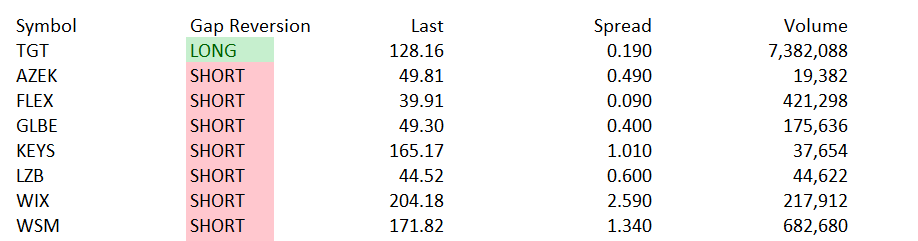
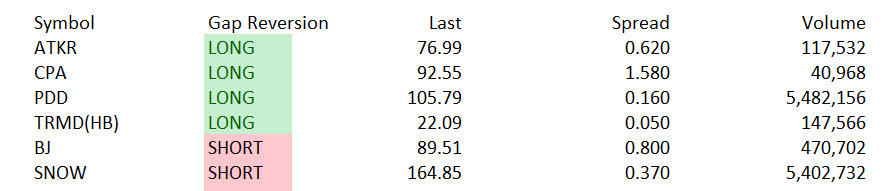
Below you'll find Ian's setups stacked up and ordered chronologically. As this service once resided at another home, the alerts only go back to mid July. For a full track record, see the portfolio.November 22, 2024

Intraday Trading Habits
How a Day Trader Should Prepare for the Trading Day:
Build Strong Intraday Trading Habits
Intraday trading habits
Day trading requires precision, discipline, and a well-defined routine. Success in this high-stakes environment depends on more than just a solid trading strategy—it’s about cultivating intraday trading habits that ensure consistent performance, emotional control, and adaptability to market conditions. Here’s a guide on how day traders can prepare effectively for the trading day and build strong intraday trading habits.
Morning Preparation: Setting the Stage for Success
1. Start with a Clear Mind
- Sleep and Mental Readiness: Ensure you’ve had a good night’s sleep and are mentally alert. Trading requires sharp decision-making, and fatigue can lead to costly mistakes.
- Mindfulness and Focus: Consider practicing meditation or light exercise in the morning to clear your mind and focus your energy.
2. Review Your Trading Plan
- A robust trading plan outlines:
- Entry and exit criteria for trades.
- Risk management rules, including stop losses and position sizes.
- Strategies tailored to specific market conditions (e.g., trending vs. range-bound).
- Revisit your plan to align your actions with your long-term goals and avoid impulsive decisions.
3. Conduct Pre-Market Analysis
- Market News: Review economic reports, corporate earnings, and geopolitical events that could impact the day’s volatility.
- Technical Levels: Identify key support and resistance levels, trendlines, and other technical indicators on your charts.
- Market Sentiment: Analyze pre-market futures and major indices to gauge potential trends or choppiness.
Establishing these morning routines lays the groundwork for effective intraday trading habits that will guide you throughout the session.
Intraday Habits: Staying Disciplined and Focused
1. Stick to a Routine
- Start your trading session with a consistent process, such as reviewing watchlists, adjusting charts, and organizing your trading station.
- A structured routine reduces stress and ensures you’re prepared for opportunities as they arise.
2. Focus on High-Quality Setups
- Avoid the temptation to overtrade. Not every price movement is an opportunity.
- Stick to setups with favorable risk-reward ratios and clear criteria that align with your strategy.
3. Monitor Emotional State
- Trading can be emotionally taxing, especially after a loss or a big win.
- Take regular breaks to reset your focus and avoid impulsive reactions. Use a timer or scheduled alarms to remind yourself to step away from the screen periodically.
4. Maintain a Risk-First Mindset
- Always calculate risk before entering a trade. Never risk more than a predetermined percentage of your capital on any single trade.
- Use stop-loss orders and adhere to them. Never move your stop to accommodate a losing trade.
5. Stay Adaptable
- Markets can change rapidly. If conditions deviate from your expectations, be prepared to reassess your strategy.
- Avoid revenge trading. If the market is not behaving as anticipated, it’s okay to sit on the sidelines.
By focusing on these key intraday trading habits, traders can maintain control and execute their strategies with confidence.
Post-Session Review: Learning from the Day
1. Journal Your Trades
- Record details of every trade, including:
- Entry and exit points.
- The reason for taking the trade.
- Outcome (profit or loss).
- Include notes on emotional state and lessons learned.
2. Analyze Performance
- Look for patterns in your trades. Are certain times of the day more profitable? Are there specific setups or conditions where you consistently succeed or struggle?
- Use these insights to refine your strategy and improve over time.
3. Celebrate Discipline, Not Just Profits
- Acknowledge when you’ve stuck to your plan, even if the trade was a loss. Long-term success in trading is about consistent execution, not just immediate results.
Building Long-Term Habits for Success
1. Consistency is Key
- Make daily preparation, execution, and review a non-negotiable part of your routine. Success in day trading is built over months and years, not days.
2. Continuous Education
- Markets evolve, and so should you. Regularly learn new strategies, refine your techniques, and stay updated on market developments.
3. Emphasize Health and Wellness
- Mental clarity is directly tied to physical health. Maintain a balanced diet, exercise regularly, and prioritize self-care to perform at your best.
4. Stay Connected
- Engage with trading communities or mentors to exchange ideas and gain new perspectives. Having a network can provide accountability and motivation.
Conclusion
Preparation and discipline are the foundations of successful day trading. By establishing a solid morning routine, practicing consistent intraday trading habits, and conducting thorough post-trade reviews, you can navigate the markets with confidence and control. Remember, trading is a marathon, not a sprint. Building strong habits today will lay the groundwork for a profitable and sustainable trading career.
Good Trading,
Adrian Manz
To read more trader education articles, Click Here.
November 21, 2024
Why Stocks Gap After Earnings
Why Stocks Gap After Earnings, News, and Analyst Changes
Stocks often experience significant price gaps following earnings announcements, news events, analyst upgrades, and downgrades. These gaps can confuse some traders, but understanding their causes and the role market makers or NYSE specialists play in determining the magnitude of these moves is essential for anyone looking to profit from such volatility.
Why Do Stocks Gap?
- Earnings Announcements
When a company releases earnings, the numbers often deviate from Wall Street’s expectations. If results are better or worse than anticipated, traders and investors react immediately.- Example: A company beats revenue estimates and raises guidance for the next quarter, sparking optimism. Traders buy heavily in the after-hours market, causing a gap up when regular trading resumes.
- News Events
Major news, like product launches, leadership changes, or regulatory decisions, can create sudden shifts in investor sentiment. For example, if a company announces a breakthrough technology, it may gap up as excitement builds. - Upgrades and Downgrades
Analysts from major firms often provide ratings and price targets for stocks. When a stock is upgraded or downgraded, institutional traders may adjust positions in response, creating gaps in price at the open.
The Role of Market Makers and NYSE Specialists
Market makers and NYSE specialists are pivotal in determining the magnitude of price gaps. They ensure liquidity by matching buy and sell orders, even during periods of extreme volatility. Here’s how they influence gaps:
- Setting the Opening Price:
When the market opens, market makers examine all pre-market and after-hours trades and new orders placed before the bell. They use this information to determine an opening price that reflects the stock’s supply and demand dynamics. - Absorbing Imbalances:
If there’s a significant imbalance between buy and sell orders, market makers may adjust the opening price to address the discrepancy. For instance, if demand far exceeds supply, they may set a higher opening price to attract sellers, leading to a larger gap. - Facilitating Price Discovery:
Market makers help facilitate price discovery in volatile conditions, ensuring the market reflects current sentiment. This is especially critical after earnings or major news, where sentiment can shift quickly.
Factors Influencing Gap Magnitude
Several factors determine how large a price gap will be:
- Volume: High trading volume in pre-market or after-hours can lead to larger gaps, as more participants are actively trading the news.
- Market Sentiment: Stocks in favor with bullish sentiment tend to see larger positive gaps, while those under scrutiny may experience steep declines.
- Earnings Surprises: The larger the surprise (positive or negative), the bigger the gap is likely to be.
How Traders Can Navigate Gaps
- Use Technical Levels: Look for gaps to align with significant support or resistance levels.
- Gap-and-Go Strategy: For bullish gaps, buy early momentum; for bearish gaps, short the initial weakness.
- Fade the Gap: If a gap is overextended, watch for reversals back to key price levels.
- Fading Gaps Greater Than 2 Standard Deviations
Adrian Manz’s Baltimore Chop 2SD Opening Gap
One of the most effective strategies for trading gaps is fading those representing moves greater than two standard deviations of the stock’s true range. These excessive moves often create opportunities to profit by trading against the direction of the gap, as explained in the Baltimore Chop 2SD Opening Gap Strategy.
Why Do Gaps Greater Than 2 Standard Deviations Make Good Fade Candidates?
- Overreaction to News or Earnings
- Significant gaps often occur due to overreactions in pre-market or after-hours trading, driven by emotional decision-making rather than fundamentals. When a gap exceeds two standard deviations of the stock’s average true range (ATR), it’s a sign that the move may have gone too far, too fast.
- Mean Reversion Tendencies
- Markets often revert to the mean after extreme moves. A gap of this magnitude stretches the price far from equilibrium, making it likely that the stock will retrace part or all of the move once the initial excitement or panic subsides.
- Liquidity Imbalances
- Significant gaps often create liquidity voids as market makers adjust the opening price to reflect pre-market sentiment. Once regular trading begins, institutional traders and market participants may step in to balance the market, driving a reversal toward fair value.
The Baltimore Chop 2SD Opening Gap Strategy
The Baltimore Chop targets these extreme gaps and capitalizes on their tendency to reverse. Here’s how the strategy works:
- Identify the Gap
- Measure the pre-market gap using the previous day’s closing price and compare it to the stock’s average true range (ATR).
- If the gap exceeds two standard deviations of ATR, it qualifies as a candidate for fading.
- Wait for Confirmation
- Observe the price action at the market open. Avoid entering a fade trade immediately; instead, look for signs of weakness in a bullish gap or strength in a bearish gap.
- Key indicators include rejection at key resistance (for bullish gaps) or support levels (for bearish gaps).
- Enter the Trade
- Once confirmation of a reversal is evident, take a position opposite the direction of the gap. For example:
- Consider a short position if the stock gaps sharply but begins to show selling pressure.
- If the stock gaps down but buyers start stepping in, consider a long position.
- Once confirmation of a reversal is evident, take a position opposite the direction of the gap. For example:
- Set Targets and Stops
- Target a retracement to a significant technical level, such as VWAP or a key moving average.
- To limit risk, use a tight stop-loss, placing it just above the high gap for bearish trades or below the low for bullish trades.
Why This Strategy Works
- Market Efficiency: When a stock gaps beyond two standard deviations, it’s often the result of temporary inefficiencies. These inefficiencies are typically corrected as the trading session progresses.
- Predictable Behavior: Institutional investors often take advantage of exaggerated gaps to establish or adjust positions, leading to predictable price action.
- Risk/Reward Ratio: The extreme nature of these gaps provides clear entry points, tight stop levels, and attractive profit potential.
Key Considerations When Fading Gaps
- Volume: Ensure the gap occurs on high volume, as this validates the move’s significance and increases the likelihood of a reversion.
- Broader Market Sentiment: The fade may be less reliable if the gap aligns with solid market momentum (e.g., a sector-wide rally).
- Earnings and News Context: Be cautious of fading gaps driven by exceptionally strong news or earnings surprises, as these can lead to follow-through instead of reversals.
Fading gaps greater than two standard deviations of true range is a powerful way to exploit market overreactions. By applying the Baltimore Chop 2SD Opening Gap Strategy, traders can take advantage of predictable reversals, capitalize on extreme moves, and improve their risk/reward profile. This strategy works particularly well with a disciplined approach to entry confirmation, stop placement, and profit-taking.
Conclusion
Understanding why stocks gap after earnings announcements, news, and analyst changes is critical to improving your trading strategy. By considering the roles of market makers and NYSE specialists and factors like volume and sentiment, traders can better anticipate these moves and position themselves for success.
Good Trading,
Adrian Manz
Click Here to view more articles by Julie and me.
Trading NVDA Earnings
NVIDIA Earnings Trading Strategies
This article dives into NVIDIA Earnings Trading Strategies, offering actionable insights on how to trade NVDA stock post-earnings.
NVIDIA Corporation (NVDA) is set to report its Q3 FY earnings today after the market close. Expectations are high as the company has consistently delivered impressive results, driven by its dominant position in the AI chip market and strong financial performance.
Quick Overview:
- Unmatched Streak: NVIDIA has consistently beaten earnings and revenue estimates.
- 2024 Performance: The stock is up +197% YTD and +62% from August lows.
- Investor Sentiment: Analysts remain bullish on the stock and the AI sector.
- Estimates: Revenues of $33.07B and EPS of $0.74 are expected for Q3.
- Guidance Watch: Q4 guidance and Blackwell chip demand will be critical drivers.
- Valuation Metrics: RSI of 59 and forward P/E of 42 remain below 2024 highs.
Movement Expectations:
The options market is pricing in a potential move of +/-$12 (about 9.6%), indicating significant volatility after earnings.
Analyst Sentiment:
- Ratings: 59 Buy, 4 Hold, 0 Sell.
- Average Target Price: $160.38.
What Could Happen After Earnings?
- Earnings and Guidance Beat
- If NVIDIA beats both revenue and EPS and raises Q4 guidance, the stock could see a sharp rally. Positive comments on Blackwell chip demand and AI market strength would fuel optimism.
- Trading Idea: Look for a breakout above key resistance levels around recent highs. For AI exposure, consider short-term call options or leveraged ETFs like SOXL.
- In-Line Earnings and Guidance
- If NVIDIA meets expectations but does not raise guidance, the reaction may be muted. The market might consolidate as investors look for long-term AI growth drivers.
- Trading Idea: Focus on selling covered calls to generate income or look for swing trade opportunities if the stock consolidates near support.
- Earnings Miss or Weak Guidance
- A miss on revenue or guidance could lead to a selloff as investors reassess NVIDIA’s valuation in a highly competitive market. Concerns around Blackwell demand or margins could amplify the downside.
- Trading Idea: Consider buying puts or inverse ETFs like SOXS to hedge against potential losses. Look for buying opportunities near strong support levels if the stock pulls back significantly.
Recent Earnings Reactions:
- Q2: Stock fell -6.4% despite a 6% EPS and 5% revenue beat.
- Q1: Stock rallied +16.4% after a 10% EPS and 6% revenue beat.
Historical Performance:
- NVIDIA has beaten revenue estimates in 20 of the last 20 quarters and earnings estimates in 18 of the last 20 quarters.
- The stock has risen the day after earnings in 13 of the last 20 quarters, with an average next-day return of +3.3%.
Day Trading Ideas for NVIDIA Earnings
Explore NVIDIA Earnings Trading Strategies to capitalize on potential breakouts, selloffs, or choppy trading post-report.
With NVIDIA’s earnings report set to be a major market mover, here are some day trading ideas to capitalize on potential volatility following the announcement:
- Earnings Beat: Go Long on Momentum
- Scenario: If NVIDIA beats revenue and EPS estimates and issues strong guidance, expect an immediate surge in buying interest.
- Trading Idea:
- Look for breakout levels above recent highs. If the stock breaks above this level with volume, ride the upward momentum.
- Use pre-market high levels as confirmation for entry points. Watch for continuation in the first 30 minutes of trading.
- Consider scalping call options or trading leveraged ETFs like SOXL for amplified gains on bullish momentum.
- Earnings Miss or Weak Guidance: Short the Selloff
- Scenario: If NVIDIA misses estimates or provides weaker-than-expected guidance, expect a significant selloff as investors reprice the stock.
- Trading Idea:
- Look for a breakdown below the 50-day moving average for short entries. If this level fails, a move or lower is possible.
- Use inverse ETFs like SOXS to profit from the downside with reduced individual stock risk.
- Consider buying put options for a leveraged short position, focusing on weekly expirations for quick profit.
- In-Line Earnings: Play the Volatility
- Scenario: If NVIDIA reports results that are in line with expectations, the stock could enter a period of choppy trading.
- Trading Idea:
- Use VWAP (Volume Weighted Average Price) as a key intraday indicator. Trade within a range until a clear trend emerges.
- Focus on scalping quick moves during periods of high volume and liquidity.
- Set tight stop-losses to manage risk, as range-bound trading can lead to fake breakouts or breakdowns.
- Pre-Earnings or Immediate Post-Earnings Play:
- Before the Announcement:
- Trade the options market using a straddle strategy (buy both calls and puts) to profit from the large implied move, regardless of direction. This works if the move exceeds the expected $12 range.
- For pre-market trades, focus on volume spikes in reaction to earnings and guidance.
- Right After the Announcement (Pre-Market Open):
- Watch for initial volatility in extended-hours trading. If NVIDIA gaps up or down, look for reversal opportunities at key support/resistance levels.
- Trade-Related Stocks for Sympathy Moves
- Scenario: NVIDIA earnings will likely affect other semiconductor and AI-related stocks.
- Trading Idea:
- Look at AMD, TSMC, and Intel for sympathy moves in response to NVIDIA’s report.
- Trade ETFs like SMH (VanEck Semiconductor ETF) for broader exposure to the sector.
- Watch for correlated movements in major indices like the Nasdaq 100 (QQQ) if NVIDIA drives significant momentum.
Key Day Trading Tips:
- Use Tight Stops: NVIDIA’s post-earnings moves can be highly volatile. Protect your downside with tight stop-loss orders.
- Follow Volume and Price Action: Track pre-market and intraday volume to confirm trends.
- Be Patient with Entries: Wait for clear breakouts, breakdowns, or retracements to avoid getting caught in fake moves.
- Watch Market Sentiment: For additional context, monitor how broader markets (S&P 500, Nasdaq) are reacting to NVIDIA’s report.
By following these NVIDIA Earnings Trading Strategies, traders can seize opportunities while managing risk effectively in the fast-moving market. Combining these day trading strategies with a disciplined approach allows you to capitalize on NVIDIA’s earnings volatility while managing risk effectively. The profit opportunities are abundant if you’re trading the stock, options, or related ETFs!
Good Trading,
Adrian Manz
For more articles, visit the archives. Click Here.
November 20, 2024