
Forgotten Profits Trade Setup Archive
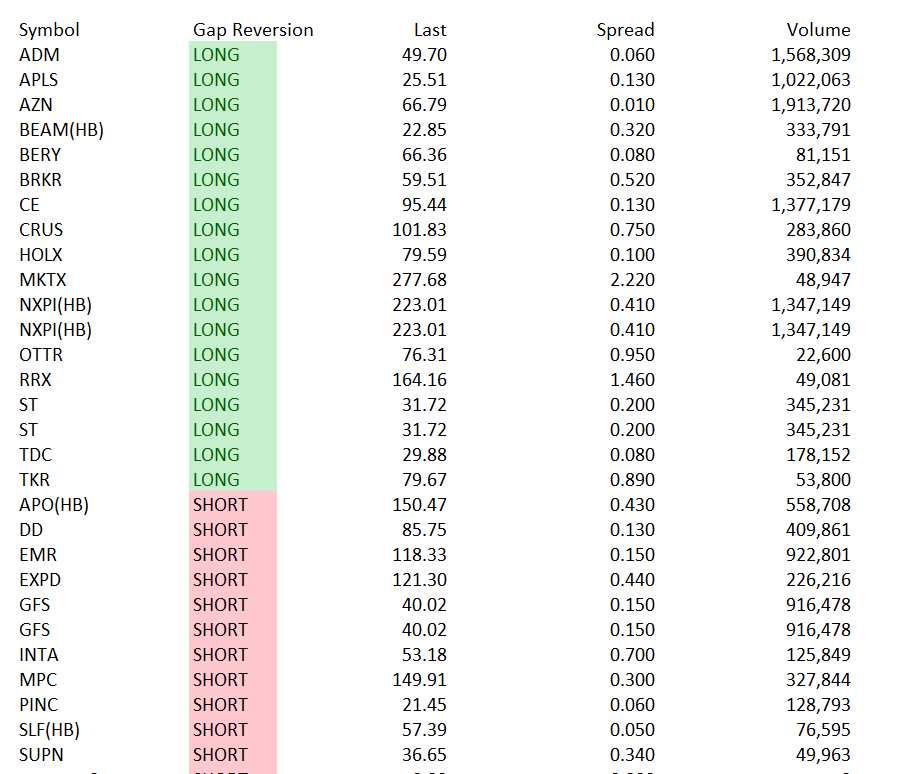
Below you'll find Ian's setups stacked up and ordered chronologically. As this service once resided at another home, the alerts only go back to mid July. For a full track record, see the portfolio.How Overnight Futures Influence the Next Day’s Stock Market
In today’s fast-moving financial markets, overnight futures provide valuable clues about how the stock market might perform the following day. Futures markets, including major indexes like the S&P 500, Dow Jones, and Nasdaq, trade 24/7, reflecting economic and global events as they unfold outside regular market hours. Traders and investors closely watch these futures to gauge sentiment and prepare for the market open. This article explores how overnight futures impact the stock market, with real examples to illustrate these effects.
What Are Overnight Futures?
Overnight futures represent contracts to buy or sell an index or commodity at a specified price in the future. Futures on indices like the S&P 500, Nasdaq, and Dow Jones give investors a sense of market direction before regular trading hours. Unlike stocks, which trade for only part of the day, these futures are active nearly 24/7, reacting immediately to international news and global economic indicators.
Key Influences of Overnight Futures on the Stock Market
1. Setting the Tone for Market Sentiment
Futures trading overnight can reflect whether investors are optimistic or anxious, setting a “tone” for how the stock market might open the next day. For example:
- Positive Economic Data or Earnings: If a major company reports strong earnings after hours, futures for the relevant index may rise. Similarly, positive data from foreign markets can create bullish sentiment, leading to higher futures prices.
- Negative News: News such as geopolitical tensions or weaker-than-expected earnings results can cause futures to decline. This decline often signals that the market may open lower.
Example: Suppose Apple (AAPL) and Microsoft (MSFT) report strong earnings after the close, and the S&P 500 futures rise 0.5% overnight. This positive futures movement suggests that investors are optimistic, which could result in a “gap up” for major indices when the market opens.
2. Liquidity and Pre-Market Movement
Overnight futures often guide liquidity, influencing pre-market trading and price discovery in U.S. markets. Investors and institutions use futures to position themselves before the stock market opens. This positioning creates liquidity that helps set early price levels, particularly when significant news has occurred overnight.
Example: After a surprise interest rate cut by the European Central Bank (ECB), S&P 500 futures may rise as investors anticipate a boost to global economic growth. By the time U.S. markets open, stocks in rate-sensitive sectors, like banks and real estate, may already have moved up in pre-market trading due to the initial price levels established by futures.
3. Influence on the Opening Gap
An overnight move in futures can lead to a “gap up” or “gap down,” where the stock market opens significantly higher or lower than the previous day’s close. Gaps occur because futures trading has already “priced in” certain expectations, which can result in sudden price adjustments as soon as the market opens.
Example: Let’s say that during Asian trading hours, oil prices surge due to an unexpected supply disruption. As oil futures rise, U.S. energy sector stocks may also increase in value. If S&P 500 futures trend up overnight due to this rally, the stock market might open higher, with oil stocks leading the way in a “gap up.”
4. Technical Levels and Resistance
Overnight futures can impact key technical levels like support and resistance, particularly for short-term traders. When futures break through significant levels during the night, these levels can serve as focal points when regular trading begins.
Example: If Nasdaq futures break above a critical resistance level overnight, this move might encourage traders to buy tech stocks once the market opens, as they expect follow-through momentum. Conversely, if futures fail to hold key support overnight, it can signal weakness, prompting traders to be cautious or even sell at the open.
Why Overnight Futures Are Important for Traders
Monitoring overnight futures provides a strategic advantage for traders, especially day traders and swing traders. Here’s why:
- Timing Trades: Futures can help traders anticipate where the market might open, allowing them to set up trades around anticipated gaps or price adjustments.
- Understanding Market Sentiment: Futures glimpse global sentiment and potential volatility. Traders can adjust their strategies accordingly, depending on whether the market is expected to be bullish, bearish, or neutral.
- Identifying Key Levels: Futures levels often align with intraday support or resistance zones, creating predictable levels traders can use for entry and exit points.
Real-World Example: How Overnight Futures Impacted the Market
Consider a scenario in 2023 when the Federal Reserve released surprising inflation data. After regular U.S. trading hours, Asian markets reacted swiftly, causing U.S. futures to drop sharply. The next day, when the U.S. markets opened, stocks gapped down due to the overnight movement in futures. Pre-market trading had already anticipated this decline, but the confirmation came as the stock market opened lower in response to futures that had already “pricing in” the Fed’s news.
This example highlights how futures can “set the stage” for the day’s trading. Investors and traders who monitored the futures overnight had an edge, as they could prepare for a lower open and adjust their positions accordingly.
Final Thoughts
Overnight futures are a powerful tool for forecasting stock market movements before the opening bell. By observing futures, traders and investors can gauge market sentiment, anticipate potential gaps, and align with key technical levels. As with any market indicator, futures are one piece of the puzzle. However, understanding how they influence the next day’s trading can provide a valuable edge, particularly in volatile or news-driven markets.
Incorporating future analysis into a daily routine can make a significant difference for those who want to stay ahead. Whether you’re a day trader looking for quick setups or a long-term investor evaluating market trends, knowing the influence of overnight futures helps you stay one step ahead.
Good Trading,
Adrian Manz
Trade Management: Essential Tips for Disciplined Day Trading
November 5, 2024
Calculating 2 Standard Deviations of the Mean: A Quick Guide
Using Statistics to Trade Stocks
In my last article, I discussed the role of variability, variance, and standard deviation for traders. I received some questions about the actual calculations required, so this post is my attempt to show you what goes on behind the curtain.
In statistics and finance, calculating 2 standard deviations of the mean helps identify data points that deviate significantly from the average. This measure is especially useful in fields like trading, where understanding volatility can inform investment decisions. Here’s how to calculate it:
Step 1: Calculate the Mean
The mean is simply the average of a set of numbers. To find it, add up all the values in your data set and divide by the total number of values.
Example:
Suppose we have daily price returns: 4, 6, 7, 8, and 10.
- Mean = (4 + 6 + 7 + 8 + 10) / 5 = 35 / 5 = 7
Step 2: Find Each Value’s Deviation from the Mean
Next, subtract the mean from each data point to find the deviation of each value from the mean.
Example:
- Deviations from the mean (7):
- (4 – 7) = -3
- (6 – 7) = -1
- (7 – 7) = 0
- (8 – 7) = 1
- (10 – 7) = 3
Step 3: Square Each Deviation
Square each deviation to avoid negative values canceling out positive ones.
Example:
- Squared deviations:
- (-3)^2 = 9
- (-1)^2 = 1
- (0)^2 = 0
- (1)^2 = 1
- (3)^2 = 9
Step 4: Calculate the Variance
The variance is the average of these squared deviations. Sum up the squared deviations and divide by the number of values (for population standard deviation) or by one less than the number of values (for sample standard deviation).
Example (assuming sample standard deviation):
- Variance = (9 + 1 + 0 + 1 + 9) / (5 – 1) = 20 / 4 = 5
Step 5: Calculate the Standard Deviation
The standard deviation is the square root of the variance.
Example:
- Standard Deviation = √5 ≈ 2.24
Step 6: Multiply by 2 for 2 Standard Deviations
To find 2 standard deviations, multiply the standard deviation by 2.
Example:
- 2 Standard Deviations = 2.24 * 2 = 4.48
Interpreting the Result
When working with data following a normal distribution, about 95% of values will fall within 2 standard deviations of the mean. This measurement helps identify values that significantly deviate from the average and can signal unusual or volatile conditions.
In trading, this metric is frequently applied to determine if a price movement is substantial enough to indicate a potential reversal or trend continuation, helping traders make more informed decisions based on statistical probability.
If you’re interested in using statistical software to analyze big datasets, Julie and I have used SPSS since we were undergrads. You can find it here https://www.ibm.com/spss.
Good Trading,
Adrian Manz
The Magnificent 7 – Earn a Living While Wall Street is Out To Lunch
The “Magnificent 7” stocks—Apple (AAPL), Microsoft (MSFT), Amazon (AMZN), Alphabet (GOOGL), Meta Platforms (META), Tesla (TSLA), and NVIDIA (NVDA)—dominate the U.S. stock market, not only in terms of market cap but also in daily trading volume and volatility. A Magnificent 7 trading strategy presents unique opportunities for day traders during the midday trading session, often viewed as a “quiet” period from 11:30 AM to 2:00 PM ET. The Magnificent 7 are ideal candidates for trading during this time.
1. Continued Liquidity and Tight Spreads During Midday
While midday trading is generally characterized by a market volume drop, the Magnificent 7 stocks maintain high activity levels even during these quieter hours. Their high liquidity means they continue to offer narrow bid-ask spreads, which is crucial for day traders looking to capture small price movements without facing wide spreads or slippage. This liquidity enables quick entries and exits, even when the rest of the market slows down.
2. Midday Volatility Magnificent 7 Trading Strategy
The Magnificent 7 stocks are some of the most volatile in the market, providing price action suitable for intraday trading. Even during midday, when many stocks exhibit low volatility, these stocks often show price fluctuations driven by investor sentiment, institutional adjustments, or sector-specific developments.
- Patterns and Trends: These stocks frequently exhibit recognizable patterns, such as consolidations or mild reversals, between 11:30 AM and 2:00 PM ET. This midday “lull” can lead to reliable setups like breakout opportunities and range-bound trades as traders anticipate a directional move in the afternoon.
- Responsive to Technical Indicators: Midday trading for these stocks often responds well to technical indicators like moving averages, VWAP (Volume Weighted Average Price), and Bollinger Bands, providing day traders with actionable signals.
3. Reaction to News and Market Sentiment Shifts
The Magnificent 7 stocks often react to the news, which doesn’t always come only at the open or close. Intraday news, analyst updates, or sector-wide developments in tech, consumer behavior, or global trends can trigger midday price movements, particularly in these high-profile stocks. This news sensitivity makes the Magnificent 7 a good choice for day traders looking to capture moves spurred by mid-session news catalysts.
- Market Sentiment Drivers: Because these stocks are bellwethers for the tech and consumer sectors, market sentiment shifts or changes in the direction of index futures can cause quick price adjustments. Traders can capitalize on this sentiment-driven movement by watching news feeds and economic calendars for events scheduled around midday.
4. Institutional Positioning and Sector Rotations
Large institutions frequently adjust or rebalance portfolios around midday, and the Magnificent 7 stocks are often focal points for these moves. Sector rotations, especially in tech-heavy indexes like the NASDAQ 100, can create price swings in these stocks as funds either increase or reduce exposure to tech and growth stocks.
- Institutional Activity: Midday adjustments by institutional players add depth to trading volume, causing price shifts that day traders can exploit. Identifying and trading alongside institutional buying or selling waves can be a highly effective strategy, particularly in highly liquid stocks like the Magnificent 7.
- Sector Sensitivity: When tech, consumer discretionary, or other relevant sectors see intraday moves, the Magnificent 7 are typically at the center of the action. Day traders can take advantage of the mid-session sector shifts by monitoring leading tech and consumer trends to identify potential trade opportunities.
5. Smooth Entry and Exit Points with Options Liquidity
The Magnificent 7 stocks offer additional flexibility for day traders using options due to their liquid options markets. Even during midday, these stocks have highly active options chains with numerous strike prices and expiration dates, allowing traders to deploy strategies like quick scalps or hedged positions.
- Weekly and Daily Expirations: With weekly and even daily expirations available, traders can access short-term options contracts to capture midday moves without committing significant capital outlays.
- Volatility Premiums: Options on these stocks often carry a volatility premium, allowing traders to take advantage of quick intraday swings using options for added leverage and limited downside risk.
6. Predictable Afternoon Transition
Trading the Magnificent 7 during midday often sets the stage for an afternoon move. Between 11:30 AM and 2:00 PM ET, these stocks can establish baselines or consolidation patterns that frequently lead to stronger moves as the afternoon session approaches. This midday setup provides day traders with a preview of potential breakouts or reversals going into the final hours of trading.
- Pre-Afternoon Volatility Buildup: If one of these stocks has been consolidating or holding a range during midday, a breakout move in either direction around 2:00 PM ET can signal momentum for the rest of the trading session.
- Opportunity to Plan Trades: Observing the midday action in the Magnificent 7 allows traders to strategize and place limit orders or set alerts for the likely afternoon moves, increasing the potential for successful executions.
Final Thoughts
The Magnificent 7 stocks stand out as ideal day trading candidates during the midday session thanks to their sustained liquidity, volatility, and responsiveness to market news and technical indicators. For traders who prefer consistency and predictable patterns during the quieter hours, these stocks provide ample opportunities to profit from midday market dynamics. Whether through direct share trading or options, the Magnificent 7 remains top choices for traders seeking reliable setups and seamless execution between 11:30 AM and 2:00 PM ET.
You can find my course on how I trade the Magnificent 7 profitably every day here.
Good Trading,
Adrian Manz
Why NVDA Tops My List of Trading Candidates
NVIDIA Corporation (NVDA) has become one of the most popular stocks among day traders, and for good reason. With high daily volume, volatility, and relevance in rapidly evolving industries like artificial intelligence, gaming, and data centers, NVDA offers plenty of opportunities for those looking to capitalize on intraday price movements.
1. High Liquidity and Volume
NVDA consistently ranks among the highest-volume stocks on major exchanges. This liquidity ensures that traders can enter and exit positions easily, with minimal slippage, even when trading large volumes. The high daily volume also keeps bid-ask spreads tight, making it easier to capture small price movements for quick profits.
2. Volatility Creates Frequent Opportunities
Day traders thrive on volatility, and NVDA delivers just that. It’s a stock that regularly experiences substantial price swings within a single trading session. This volatility is fueled by its sensitivity to industry developments, earnings reports, and even broader market trends, especially as it relates to the tech sector. Traders can take advantage of these sharp price movements to enter and exit trades with high potential for gains.
3. Clear Reaction to News and Earnings
NVDA’s position in cutting-edge technology sectors means that it frequently makes headlines, which often translates to quick, substantial price reactions. Positive news, like new product launches or partnerships, can push NVDA higher, while regulatory developments or competitive threats can trigger pullbacks. Earnings announcements are also a major driver, with NVDA often experiencing large moves before, during, and after earnings calls.
4. Responsive to Technical Patterns and Indicators
As a heavily traded stock, NVDA often follows clear technical patterns, which day traders can use to set up trades. Common indicators like moving averages, Bollinger Bands, and the Relative Strength Index (RSI) provide reliable signals in NVDA’s price action. Day traders often use these indicators for scalping, breakouts, and trend-following strategies, all of which can be highly effective on NVDA.
5. Options Liquidity for Additional Leverage
NVDA also has a highly liquid options market, making it an attractive stock for traders who want to use options for leverage or manage risk. With weekly options and a wide range of strike prices, traders can access additional trading opportunities to take advantage of NVDA’s price movements with a limited upfront capital outlay.
NVDA’s high liquidity, volatility, and responsiveness to news make it a top choice for day traders seeking frequent opportunities and reliable price patterns. For those with a solid strategy and discipline, NVDA offers numerous intraday setups that can lead to profitable trades.
Good Trading,
Adrian Manz