
The Small Cap Swing Trader Alert Archive
Below you'll find The Small Cap Swing Trader setups stacked up and ordered chronologically.Why Markets Are Shrugging Off Trump’s Latest Tariff Threats
Why Investors Aren’t Panicking Over Trump’s Tariff Threats—Yet
In a week filled with bold rhetoric and escalating threats from the Trump administration, investors might have expected the stock market to recoil. After all, reports on Friday revealed the White House is considering new tariffs of 15% to 20% on European Union goods—a substantial increase from prior expectations. Financial Times

However, instead of panic, the S&P 500 briefly dipped before rebounding to end the day virtually flat. This muted reaction is becoming a pattern.
Despite headline after headline warning of rising trade tensions, Wall Street has largely stayed the course. Even the so-called “liberation day” tariffs announced back in April—an event that temporarily rattled markets—ultimately proved to be a speed bump rather than a derailment.
So why are investors so calm now?
1. Tariffs Are Seen as a Negotiation Tactic
One prevailing theory is that Trump’s tariff threats are more about leverage than long-term policy. Many professional investors now subscribe to what’s been dubbed the “TACO trade”—Trump Always Chickens Out.
This idea, coined by a columnist at the Financial Times, suggests that Trump’s tough talk is meant to speed up negotiations, and if markets begin to wobble, he’s likely to pull back, just as he did in April when a 90-day tariff delay was announced shortly after a market selloff.
“Frustrated with the slow pace of talks, it seems the president is trying to incentivize trade partners to move faster,” said Dennis DeBusschere of 22V Research. According to his conversations with institutional investors, the expectation remains that tariffs will be rolled back once deals are finalized.
2. Legal Hurdles May Neutralize Tariffs Anyway
Another reason for investor calm: the courts. Back in May, federal judges ruled that Trump lacked the authority to enforce his April tariff package. While an injunction allowed them to remain temporarily, many believe future tariffs will face similar legal challenges.
This creates a “wait and see” buffer that allows markets to price in the possibility rather than certainty, thereby mitigating immediate volatility.
3. Strong Earnings Are Taking the Spotlight
The corporate earnings season has gotten off to a strong start, and investors are focusing on fundamentals rather than policy noise. Reports from major banks last week, including JPMorgan Chase, Citigroup, and Bank of America, highlighted resilient consumer credit and economic strength, with low default rates and stable loan portfolios.
Big tech and consumer names are also posting better-than-expected results, helping the S&P 500 and Nasdaq Composite stay near all-time highs.
4. Economic Data Continues to Impress
Despite inflationary pressure and trade uncertainty, key economic indicators remain strong. The latest employment and retail sales data point to an economy that continues to expand. Add to that the passage of the “One Big Beautiful Bill Act”, which finalized key budget and tax measures, and it’s clear why investors feel more grounded than they did in the spring.
“Back in April, we didn’t know how the budget bill was going to come out… Now we know,” said Erik Aarts, senior fixed-income strategist at Touchstone Investments. “Markets have been able to lean into that a little bit.”
The Bottom Line
Markets are far from complacent, but every new tariff headline no longer rattles them. Investors are placing their faith in negotiating bluster, legal challenges, and strong economic fundamentals to weather the storm.
Whether that optimism holds will depend on how aggressively the administration acts—and how long the economy can continue to shrug off policy risk.
For now, the message from Wall Street is clear: It’s going to take more than tariff talk to derail this rally.
Nvidia Nears Record Highs as Trump AI Push and Google Spending Fuel Optimism
Nvidia Stock Surges as AI Momentum Builds from Both Silicon Valley and Washington

Shares of Nvidia (NASDAQ: NVDA) were on the rise again Thursday morning, buoyed by a surge in optimism around artificial intelligence. The stock climbed 1.1% in premarket trading to $172.64, following a 2.3% gain on Wednesday. With this move, Nvidia is approaching its all-time high closing price of $173, hit just last week.
A combination of public and private sector support for AI development fuels the gains. Alphabet (NASDAQ: GOOGL), Google’s parent company, signaled its commitment to AI infrastructure by increasing its full-year capital expenditure forecast to $85 billion—up from $52.5 billion in 2024. A substantial portion of that spend is expected to go toward building and expanding data centers powered by Nvidia’s high-performance AI chips.
Nvidia’s momentum is also being driven by a policy tailwind from Washington. On Wednesday, the Trump administration unveiled a national “action plan” to bolster American dominance in artificial intelligence. Key elements of the initiative include making it easier for tech firms to build domestic data centers—an area where Nvidia’s hardware is a cornerstone.
Nvidia CEO Jensen Huang praised the initiative during a Fox News interview Wednesday, saying:
“What the president is announcing today is going to accelerate AI innovation in America. He’s going to enable [the] American tech stack to be proliferated around the world at an incredible rate.”
Huang, who was seated in the front row of the White House’s AI Summit, appeared to show strong alignment with the administration’s goals for AI expansion, emphasizing the role of American chipmakers in leading the next wave of global tech infrastructure.
Other semiconductor stocks also saw a lift. Advanced Micro Devices (NASDAQ: AMD) gained 1.2% in premarket trading, while Broadcom (NASDAQ: AVGO) rose 2.5%.
A Perfect Storm for Nvidia
With both increased corporate investment and supportive government policy aligning, Nvidia appears to be sitting in a sweet spot. The company has already been the poster child of the AI-driven tech rally over the past year, and these latest developments could provide further upside.
As the AI arms race heats up, Nvidia’s dominant position in GPU-based computing, combined with a surge in demand for AI infrastructure, places it at the center of one of the most powerful trends in global technology.
Big Banks Signal Strength: What Q2 Earnings Reveal About the U.S. Economy
Big Banks Say the Economy Is Healthier Than It Feels

Despite a backdrop of political uncertainty, trade tensions, and rising consumer prices, America’s largest banks delivered a surprisingly optimistic message last week: The economy is stronger than headlines suggest.
Quarterly earnings reports from JPMorgan Chase, Bank of America, Citigroup, Wells Fargo, and other major banks showed resilience in both consumer and commercial credit markets, as well as solid performance in core banking operations. For investors and consumers alike, the takeaway was clear: Don’t underestimate the American economy.
Consumers Are Keeping Up—Thanks to a Strong Labor Market
All four major consumer banks—JPMorgan, Bank of America, Citigroup, and Wells Fargo—reported low levels of delinquency and charge-offs. In simple terms, people are paying their bills on time, and banks aren’t having to write off large amounts of bad debt.
“While there are nuances around the edges, consumer credit is primarily about the labor market,” said JPMorgan CFO Jeremy Barnum during the bank’s earnings call. “In a world with a 4.1% unemployment rate, it’s just going to be hard—especially in our portfolio—to see a lot of weakness.”
This is a key point. Despite consumer sentiment surveys showing anxiety over inflation and policy uncertainty, people with jobs continue to service their debt responsibly, reinforcing the idea that confidence may be low, but fundamentals are strong.
Commercial Credit Risks Are Contained—for Now
There were a few blips in the commercial lending space. Wells Fargo noted a slight uptick in net charge-offs for business clients, and Citigroup flagged a rise in nonaccrual corporate loans. But in both cases, executives were quick to frame the losses as isolated rather than systemic.
“These were borrower-specific, with little signs of systematic weakness across the portfolio,” said Wells Fargo CFO Michael Santomassimo. At Citigroup, CFO Mark Mason chalked it up to an “idiosyncratic downgrade,” not a broader deterioration.
Translation: yes, there are always trouble spots—but there’s no wave of defaults or credit contagion brewing.
Political Uncertainty and Inflation Still Cloud the Outlook
Despite the upbeat tone from Wall Street, Main Street isn’t feeling quite so secure. Confusion surrounding trade policy under the Trump administration, particularly regarding tariffs, continues to inject volatility into markets and impact consumer prices. Recent inflation data already reflect rising costs tied to import duties, especially on everyday items.
This disconnect between economic performance and consumer perception is worth watching. While banks are operating from a position of strength, uncertainty in fiscal and trade policy could influence corporate behavior, investment decisions, and hiring down the line.
What It Means for Investors
The S&P 500 Bank Index has rebounded sharply in recent months, and strong earnings across the board suggest the rally may have legs. Still, much of the positive narrative hinges on the continuation of low unemployment and a resilient consumer.
For now, bank executives are betting on stability, even in the face of inflation, geopolitical risk, and shifting monetary policy. Whether that optimism proves well-placed will depend on how the macroeconomic story unfolds in the second half of the year.
Bottom Line:
The nation’s largest banks just delivered a collective vote of confidence in the U.S. economy. While consumers feel the pinch of rising prices and policy ambiguity, the underlying data—especially around employment and credit—tell a different story. And for now, at least, the story is one of quiet strength.
Trade Deal With Japan Lifts Market Sentiment, But Auto Sector Voices Concern
U.S.-Japan trade deal impact on stock market
Stock futures surged early Wednesday following President Donald Trump’s announcement of a “massive Deal” with Japan, bolstering hopes for additional trade agreements and easing market uncertainty surrounding upcoming tariff deadlines.
Trump’s Tuesday night post on Truth Social revealed that the U.S. and Japan had agreed to a trade pact featuring reciprocal 15% tariffs on Japanese exports to the U.S. The news gave a boost to equity markets:
-
Dow Jones Industrial Average futures climbed 215 points (+0.5%)
-
S&P 500 futures rose 0.4%
-
Nasdaq-100 futures edged up 0.1%
The president also indicated that U.S. officials are actively negotiating with European leaders on a similar trade accord ahead of an August 1 tariff deadline—an effort aimed at building a more favorable international trade environment following his sweeping April 2 tariff announcement that roiled markets.
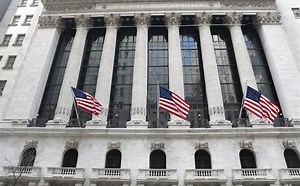
Markets React Positively
Wednesday’s uptick followed two consecutive intense sessions for U.S. equities. The S&P 500 posted a modest 0.06% gain Tuesday, marking its 11th record close of 2025, while the Dow advanced nearly 180 points. However, the Nasdaq Composite slipped 0.4% as chipmakers came under pressure.
Investors are now looking ahead to major earnings reports from Alphabet and Tesla, both of which are due after the close. Their results will kick off a critical earnings cycle for the megacap tech sector, which has been pivotal in driving market momentum. Other closely watched reports include Chipotle Mexican Grill and Mattel, as earnings season heats up.
So far, results have been strong. Of the 105 S&P 500 companies that have reported, over 86% have beaten earnings expectations, according to FactSet.
Automakers Push Back
Despite the market’s upbeat tone, the new U.S.-Japan trade deal has sparked backlash from American automakers. The American Automotive Policy Council (AAPC), representing GM, Ford, and Stellantis, has raised red flags over a provision that would drop tariffs on Japanese auto imports to 15%, while Canadian and Mexican imports remain subject to a 25% rate.
Matt Blunt, AAPC president and former Missouri governor, warned:
“Any deal that charges a lower tariff for Japanese imports with virtually no U.S. content than the tariff imposed on North American built vehicles with high U.S. content is a bad deal for U.S. industry and U.S. auto workers.”
Trump has threatened to hike tariffs on Mexico to 30% and Canada to 35% starting August 1, further fueling industry fears.
Industry Impact Already Visible
The effects of the administration’s aggressive trade stance are already showing.
-
GM said its Q2 earnings took a $1.1 billion hit from tariffs and warned of a worsening impact in Q3.
-
Stellantis reported a €300 million ($352 million) cost from U.S. tariffs so far in 2025, noting cutbacks in vehicle shipments and production.
-
In May, AAPC criticized a UK trade deal that allows British automakers to ship 100,000 cars per year at a 10% tariff, arguing it disadvantages U.S. workers.
The White House, however, stood by the deal. Spokesman Kush Desai called it:
“A historic win for American automakers by putting an end to Japan’s unfair auto trade barriers for American-made cars.”
Outlook
While markets embraced the news as a sign of progress on the trade front, the underlying tension between political wins and economic consequences is growing sharper—particularly in the automotive sector. With earnings from key players on deck and the August 1 deadline looming, both investors and manufacturers are bracing for a high-stakes month.
Bottom line: The trade deal with Japan has injected near-term optimism into the markets, but unresolved tariff imbalances and mounting industry costs may temper that enthusiasm as the full implications unfold.