
Alibaba Challenges Pentagon Blacklist as US-China Tech Tensions Escalate
Geopolitical risk continues to play an increasingly important role in financial markets as technology companies become central to national security policy. The latest example comes from Alibaba, which has filed a lawsuit seeking removal from a U.S. government blacklist that identifies companies alleged to have ties to China’s military.
The legal challenge highlights how political decisions can quickly become market-moving events, creating new risks and opportunities for investors holding international technology stocks.
Why Alibaba Is Suing
The Alibaba Pentagon blacklist dispute stems from the U.S. Department of Defense’s decision to add Alibaba, along with several other major Chinese companies, to its “1260H” list of Chinese military companies.
The designation alleges certain firms maintain connections to China’s People’s Liberation Army (PLA) or participate in China’s military-civil fusion strategy, which encourages commercial companies to share technology and innovation with the military.
Alibaba strongly disputes those claims.
In its lawsuit filed in a California federal court, the company argues that the Pentagon acted without substantial evidence and failed to consider information contradicting its conclusions. Alibaba maintains that it is a commercial technology company with no military affiliation.
Understanding the 1260H List
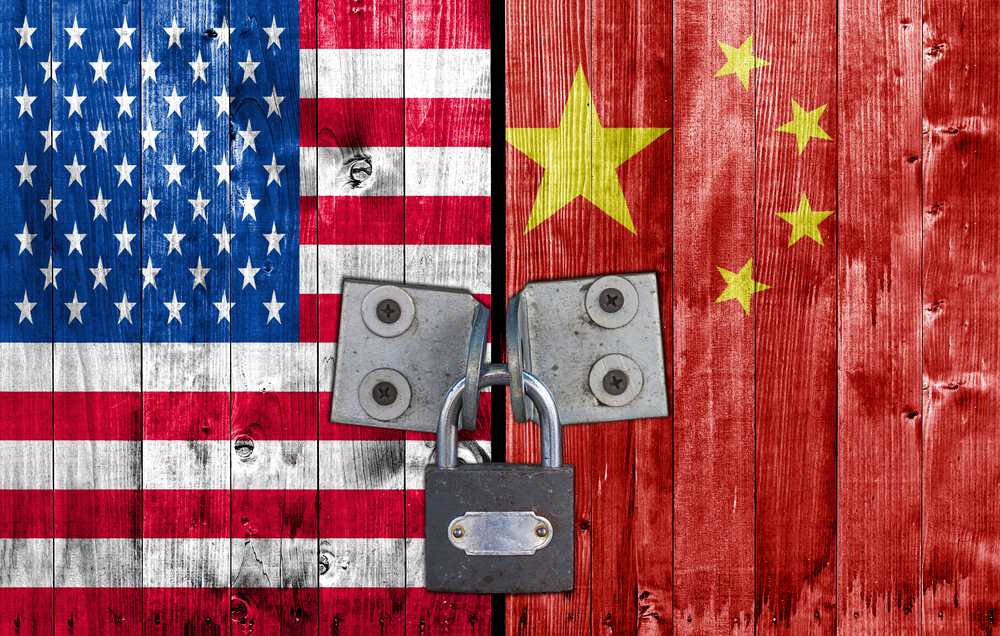
The 1260H list was created by Congress to identify Chinese companies believed to support China’s military modernization.
Importantly, inclusion on the list does not immediately prohibit U.S. investors from owning shares or require companies to cease operations in America.
However, appearing on the list creates significant reputational and regulatory risks.
The Alibaba Pentagon blacklist designation could eventually lead to:
- Restrictions on government contracts
- State pension fund divestments
- Additional federal sanctions
- Potential delisting pressure from U.S. exchanges
- Greater scrutiny from institutional investors
While none of those outcomes are guaranteed, markets often begin pricing in future regulatory risk well before formal action occurs.
Broader US-China Technology Competition
Alibaba’s lawsuit comes amid an increasingly competitive technology relationship between Washington and Beijing.
Over the past several years, U.S. policymakers have expanded restrictions involving advanced semiconductors, artificial intelligence, telecommunications equipment, quantum computing, and critical infrastructure.
The objective is to slow China’s access to technologies viewed as strategically important while strengthening domestic and allied supply chains.
The latest Alibaba Pentagon blacklist challenge reflects how technology companies increasingly find themselves caught between commercial objectives and national security priorities.
Potential Market Impact
For investors, the legal dispute extends beyond Alibaba itself.
Other Chinese companies recently added to the Pentagon’s list—including electric vehicle manufacturer BYD and biotechnology company WuXi AppTec—are also facing heightened regulatory uncertainty.
If courts uphold the Pentagon’s designations, institutional investors may reassess their exposure to Chinese technology companies, particularly those listed on U.S. exchanges.
Conversely, if Alibaba succeeds in court, the ruling could establish a precedent for other companies seeking removal from the blacklist.
Trading Implications
Geopolitical developments have become increasingly important drivers of sector rotation.
Traders should monitor developments involving:
- Chinese ADRs listed in the United States
- Semiconductor manufacturers
- Artificial intelligence infrastructure
- Electric vehicle companies
- Biotechnology firms with cross-border operations
Headline risk surrounding government investigations or sanctions can produce sharp price swings that often occur outside of traditional earnings cycles.
Rather than reacting emotionally, disciplined traders should identify key technical support and resistance levels while remaining aware of scheduled legal decisions and government announcements.
Looking Ahead
The Alibaba Pentagon blacklist lawsuit represents another chapter in the evolving economic competition between the world’s two largest economies.
As artificial intelligence, semiconductor manufacturing, cybersecurity, and advanced technologies become increasingly intertwined with national security, investors should expect regulatory developments to remain an important catalyst for market volatility.
For active traders, understanding both the technical landscape and the geopolitical backdrop may provide a valuable edge when evaluating opportunities in globally connected technology stocks.
Key Takeaway
Political risk has become a fundamental market variable. Whether the courts ultimately remove Alibaba from the Pentagon’s designation or uphold it, the case demonstrates how government policy can influence valuations, investor sentiment, and capital flows across the technology sector.
Related TraderInsight Articles
- How AI Is Reshaping Global Technology Competition
- Pax Silica Alliance Expands as AI Supply Chain Race Accelerates
- Why Geopolitics Matters More Than Ever for Traders
- Understanding Sector Rotation During Global Policy Shifts