
Hyundai Robot Automation Sparks Labor Showdown: What It Means for Investors
Artificial intelligence is transforming industries at an unprecedented pace, but one of its biggest challenges may not be technological—it may be human.
South Korea’s largest automaker, Hyundai Motor, now faces the possibility of its first major strike in years after workers overwhelmingly voted to authorize industrial action over plans to introduce humanoid robots into its manufacturing operations. The dispute highlights a growing global issue as companies pursue greater efficiency while employees worry about job security in the age of AI.
The Hyundai robot automation dispute could become one of the most closely watched labor battles of the artificial intelligence era.
Why Workers Are Concerned
The conflict centers on Hyundai’s plan to deploy Atlas, the advanced humanoid robot developed by its subsidiary Boston Dynamics.
The company intends to begin introducing Atlas into manufacturing facilities, starting with its electric vehicle plant in Georgia, where executives say the robots will perform repetitive, hazardous, and physically demanding tasks.
Union leaders, however, see the technology differently.
They argue that increasingly capable humanoid robots represent a long-term threat to employment and insist workers deserve a greater voice before automation is expanded.
The union has stated that no new robots should enter Hyundai factories without prior labor-management agreement.
The Rise of Humanoid Robots
The Hyundai robot automation strategy reflects a broader shift taking place across global manufacturing.
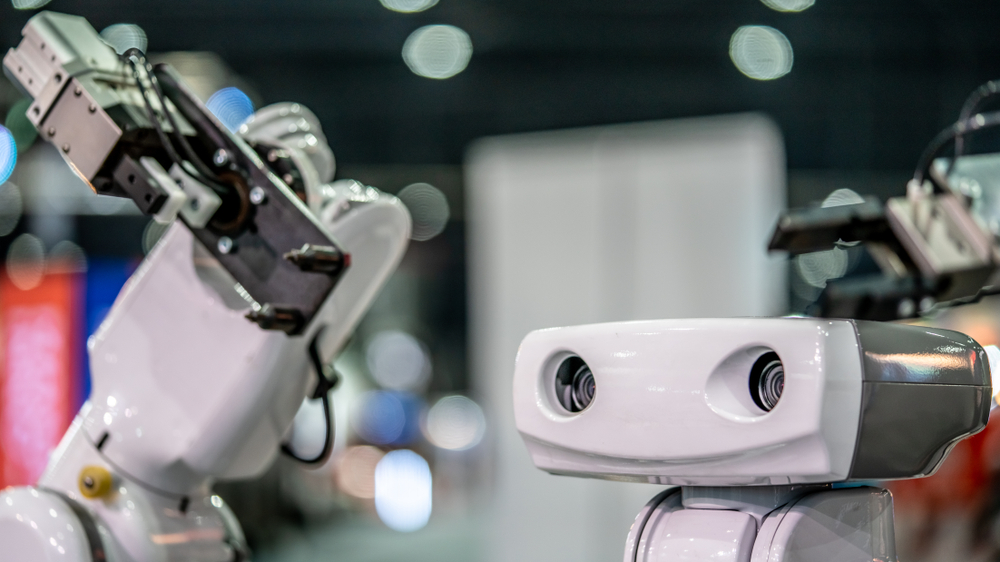
Unlike traditional industrial robots that perform fixed, repetitive movements, humanoid robots are being designed to:
- Navigate complex factory environments
- Use human-like dexterity
- Lift and transport materials
- Inspect production lines
- Adapt to changing workflows
- Work safely alongside human employees
Advances in artificial intelligence, computer vision, and machine learning have significantly accelerated the capabilities of these systems over the past several years.
Hyundai’s Long-Term Vision
Executive Chairman Euisun Chung has made no secret of Hyundai’s ambitions.
The company aims to become a global leader not only in electric vehicles but also in robotics, autonomous driving, and intelligent manufacturing.
At CES earlier this year, Hyundai announced plans to manufacture up to 30,000 Atlas humanoid robots annually.
Management believes combining decades of manufacturing expertise with AI-driven robotics could provide a competitive advantage as labor shortages and production costs continue rising worldwide.
The Hyundai robot automation initiative, therefore, extends well beyond replacing individual factory tasks—it represents a strategic investment in the future of manufacturing.
More Than a Wage Dispute
Although concerns over automation dominate headlines, the labor negotiations also include traditional economic issues.
The union is seeking:
- A performance bonus equal to 30% of company net profits
- An increase in the retirement age from 60 to 65
- Higher base wages
- Greater participation in technology implementation decisions
The timing is particularly sensitive.
Hyundai’s profits have recently come under pressure from slowing electric vehicle demand, rising supply-chain costs, and continuing tariff uncertainty.
Meanwhile, workers have watched employees at AI-driven semiconductor companies such as Samsung Electronics and SK Hynix receive substantial bonuses as those businesses benefit from booming demand for artificial intelligence infrastructure.
Trading Implications
The Hyundai robot automation story reflects one of the most important long-term investment themes facing global markets.
Investors should continue monitoring companies involved in:
- Industrial robotics
- Artificial intelligence software
- Automation equipment
- Electric vehicle manufacturing
- Factory sensors and machine vision
- Semiconductor suppliers serving robotics applications
- Industrial automation software
As AI capabilities improve, businesses across manufacturing, logistics, healthcare, and construction are expected to accelerate automation investments.
However, labor relations may increasingly become an important variable affecting implementation timelines, production costs, and investor sentiment.
The Bigger Picture
The debate unfolding at Hyundai extends far beyond one automaker.
It raises broader questions facing virtually every industry:
- How quickly should AI replace repetitive work?
- How should productivity gains be shared?
- What role should employees play in automation decisions?
- Can businesses balance efficiency with workforce stability?
These questions are likely to become increasingly common as artificial intelligence moves from software into the physical economy through robotics and intelligent manufacturing.
The Hyundai robot automation negotiations may therefore serve as an early blueprint for how labor and management navigate the next generation of workplace transformation.
Important Takeaway
Artificial intelligence is no longer just changing software—it is transforming factories, warehouses, and industrial production. For investors, understanding both the technological opportunity and the human challenges surrounding automation may become just as important as analyzing earnings reports.
Related TraderInsight Articles
- How Artificial Intelligence Is Transforming Manufacturing
- The AI Infrastructure Boom Extends Beyond Semiconductors
- Humanoid Robots: The Next Multi-Trillion-Dollar Industry?
- Performance Psychology: Adapting to Technological Change