
Ariane 6 Comeback Challenges SpaceX Dominance in the New Space Race
Just a decade ago, Elon Musk famously joked that Europe’s flagship rocket program was “dead.” Today, that prediction looks far less certain.
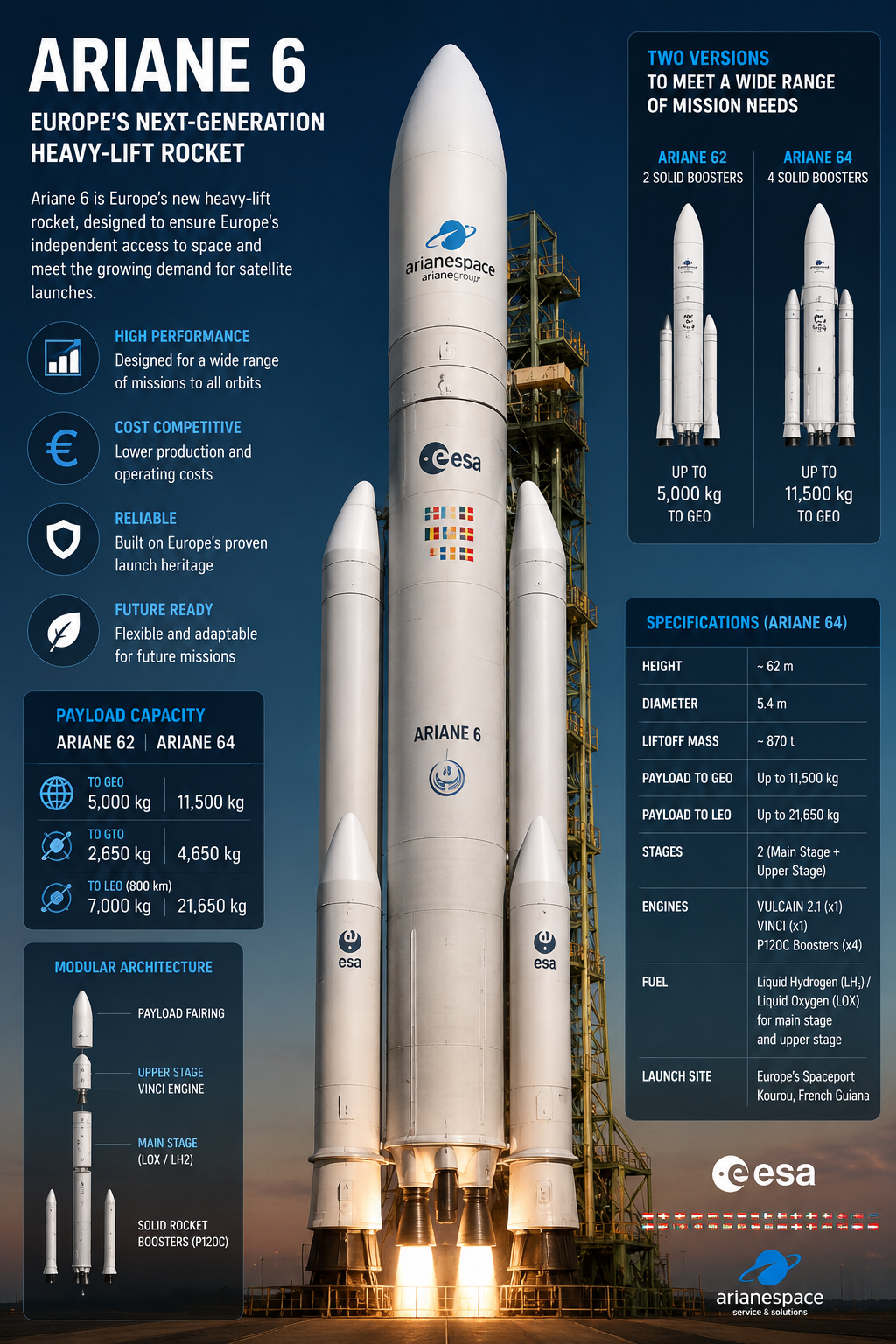
Following years of delays and skepticism, the Ariane 6 comeback is gaining momentum as Europe’s premier heavy-lift rocket steadily returns to commercial service. Backed by Amazon launch contracts and renewed European interest in space independence, Ariane is positioning itself as more than simply an alternative to SpaceX—it is becoming a strategic asset for an increasingly uncertain geopolitical world.
For investors, the story illustrates how government priorities, technological innovation, and commercial demand continue reshaping one of the fastest-growing industries on the planet.
Europe’s Return to Space
Ariane rockets dominated commercial satellite launches for decades before SpaceX fundamentally changed the economics of spaceflight.
Reusable Falcon 9 rockets dramatically lowered launch costs while increasing launch frequency, leaving traditional expendable rockets struggling to compete.
Production delays for Ariane 6 only widened that gap, forcing even the European Union to rely on SpaceX to launch key Galileo navigation satellites in 2023.
Now, however, the Ariane 6 comeback is beginning to take shape.
Since entering service in 2024, Ariane 6 has successfully completed every mission, including multiple launches this year carrying Amazon’s Project Kuiper satellites into low Earth orbit.
Amazon Provides Important Validation
One of Ariane’s biggest endorsements comes from Jeff Bezos.
Amazon selected Ariane 6 as one of the launch providers for Project Kuiper, its global satellite broadband constellation designed to compete directly with SpaceX’s Starlink network.
The latest mission successfully placed 36 satellites into orbit using Ariane’s most powerful configuration, demonstrating the precision and reliability commercial customers demand.
Winning high-profile contracts from Amazon provides credibility that could attract additional government and commercial customers.
Can Ariane Really Compete with SpaceX?
The answer depends on how success is measured.
SpaceX continues to dominate commercial launch services.
Consider the differences:
- Falcon 9 completed approximately 165 orbital launches last year.
- Ariane 6 expects to perform roughly 10 launches annually once fully operational.
- Estimated launch cost per kilogram:
- SpaceX Falcon 9: approximately $2,400/kg
- Ariane 6: approximately $5,000/kg
These numbers clearly favor SpaceX.
However, Ariane executives argue that Europe is pursuing a different objective—guaranteeing independent access to space rather than directly matching SpaceX’s launch volume.
The Ariane 6 comeback is therefore less about replacing SpaceX and more about ensuring Europe controls its own critical space infrastructure.
Space Is Becoming National Security
The strategic importance of launch capability has increased dramatically.
Conflicts in Ukraine and the Middle East, growing competition with China, and expanding military satellite networks have reinforced the need for sovereign launch capabilities.
European governments increasingly recognize that depending entirely on foreign providers—even trusted allies—creates long-term strategic vulnerabilities.
Future European programs, including the IRIS² encrypted satellite constellation, are expected to rely heavily on Ariane launches.
That provides a relatively stable pipeline of government-backed missions regardless of commercial market conditions.
The Next Challenge: Reusable Rockets
Europe also understands that reusable launch technology is the industry’s future.
ArianeGroup is developing MaiaSpace, its own reusable rocket, with an inaugural launch expected next year.
If successful, reusable technology could significantly narrow the cost gap with SpaceX while increasing launch cadence.
The company is simultaneously modernizing manufacturing by streamlining production, accelerating fuel tank assembly, and improving logistics throughout its network of more than 600 suppliers across Europe.
Trading Implications
The Ariane 6 comeback reinforces several long-term investment themes that active traders should monitor:
- Commercial space infrastructure
- Satellite communications
- Launch providers
- Defense contractors
- Aerospace manufacturers
- Government technology spending
- Earth observation and intelligence systems
As governments increase spending on secure communications, missile defense, and space-based intelligence, demand for reliable launch services is likely to remain strong regardless of broader economic conditions.
Institutional investors increasingly view the space economy as a multi-decade secular growth story rather than a niche aerospace industry.
Why Traders Should Care
Although SpaceX remains the industry’s undisputed leader, competition continues expanding throughout the global launch market.
Amazon’s Project Kuiper, Europe’s IRIS² constellation, military satellite deployments, and growing commercial demand suggest launch activity may continue accelerating for years.
The Ariane 6 comeback also demonstrates an important investing principle: markets often reward companies that successfully execute operational turnarounds after periods of skepticism.
For traders, monitoring order flow, institutional positioning, and government policy alongside technical analysis can help identify emerging leaders before they become consensus investments.
Important Takeaway
The global space race has evolved beyond exploration. Today it encompasses national security, artificial intelligence infrastructure, communications, defense, and geopolitical independence. Companies that enable reliable access to space are becoming increasingly strategic assets in the global economy.
Related TraderInsight Articles
- SpaceX IPO Reshapes the Commercial Space Industry
- Project Kuiper vs. Starlink: The Next Satellite Internet Battle
- AI Infrastructure Extends Beyond Semiconductors
- Defense Spending and the New Space Economy