
Forgotten Profits Trade Setup Archive
Below you'll find Ian's setups stacked up and ordered chronologically. As this service once resided at another home, the alerts only go back to mid July. For a full track record, see the portfolio.How to Trade Extended Futures at the Open
Cease-Fire Rally: How to Trade Extended Futures at the Open
Markets surged overnight after a surprise geopolitical development: a two-week cease-fire agreement between the U.S. and Iran, along with a reopening of the Strait of Hormuz.
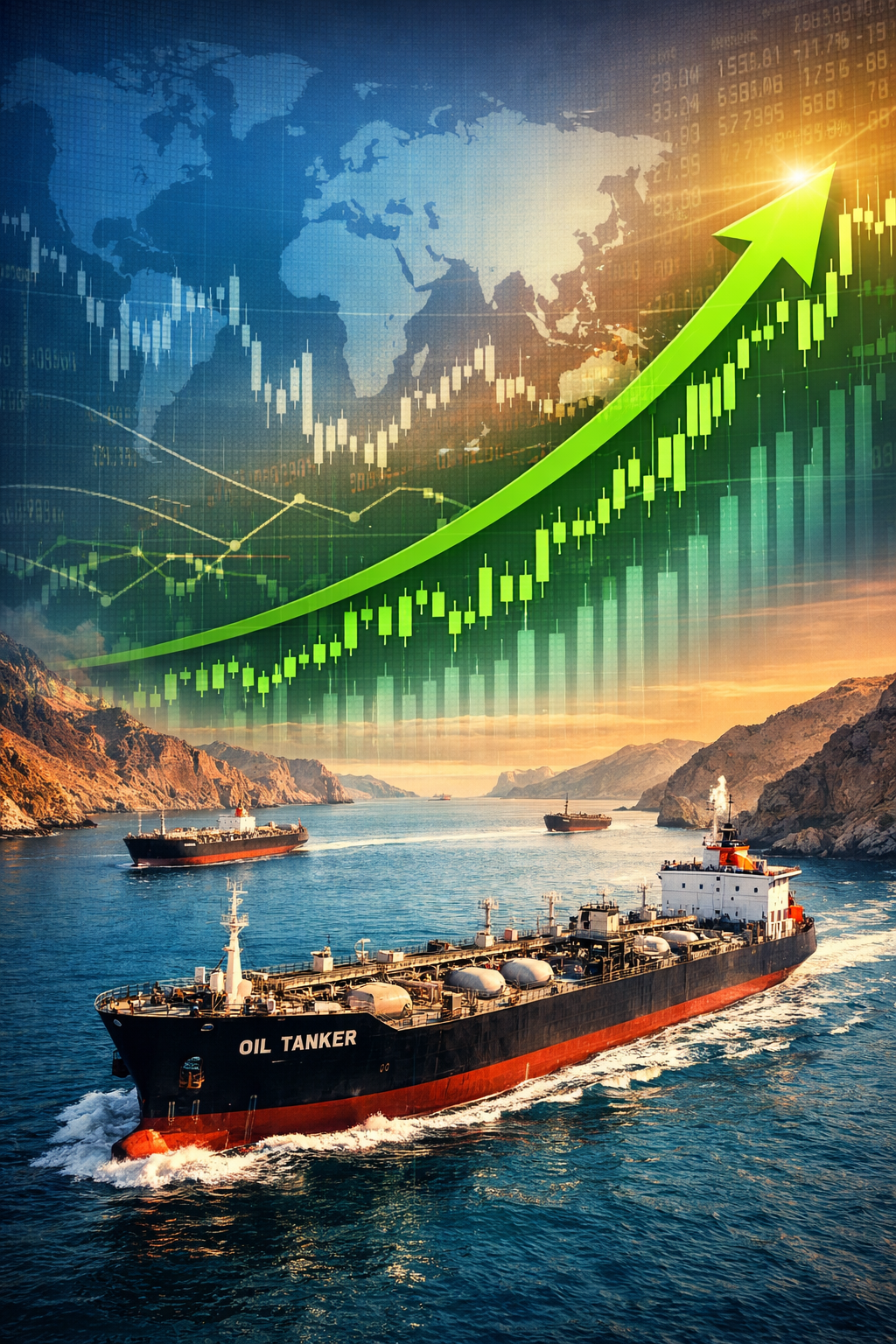
Stock futures jumped nearly 2%, while crude oil dropped sharply—classic risk-on behavior following de-escalation.
But for traders, the opportunity is not in reacting to the headline.
It is in understanding how markets behave when we come into the session with extended futures at the open.
The First Principle: The Move Is Already Underway
When futures are sharply higher overnight, most of the emotional buying has already happened.
This is where inexperienced traders get trapped—chasing strength just as institutions begin distributing inventory.
As we’ve discussed in How Elite Traders Handle Volatility, the best opportunities often come from structured reactions—not emotional momentum.
That is why extended futures at the open frequently lead to two-sided trade opportunities.
Three Common Scenarios at the Open
1. Gap and Fade (Mean Reversion)
This is the highest-probability outcome in many cases.
- Price opens above value
- Early buyers take profits
- Institutions sell into strength
- Price rotates lower
This behavior aligns closely with the statistical tendencies behind opening gaps, particularly the 2SD Opening Gap framework.
2. Gap and Go (Continuation)
This occurs when the move is driven by real institutional urgency.
- Immediate follow-through
- Strong volume expansion
- Minimal pullbacks
In this scenario, extended futures at the open are not exhaustion—they are confirmation.
3. Two-Way Rotation (Most Common)
The most realistic outcome is a two-sided market:
- Initial push higher
- Sharp reversal
- Range-bound chop
This is where prepared traders thrive—executing structured trades instead of forcing direction.
What to Watch at the Open
Opening Drive
- Does price continue immediately?
- Or stall at the highs?
Failure to continue is often the first signal of a fade.
Volume Confirmation
- Is volume expanding with price?
- Or is the move unsupported?
Key Levels
- Premarket highs/lows
- Opening range
- Volatility bands
These levels determine whether extended futures at the open will hold or break.
What to Monitor Throughout the Day
Oil Markets
The sharp drop in crude is a key driver.
- Continued weakness = equity support
- Reversal = risk returning
Headline Risk
This is a temporary cease-fire—not a resolution.
As discussed in our geopolitical trading analysis, markets often reprice quickly as new information emerges.
Leadership Stocks
- Are the Magnificent 7 confirming?
- Is QQQ leading or lagging?
Weak leadership = fragile rally.
The Professional Approach
When facing extended futures at the open, professionals do not predict.
They prepare.
- Define scenarios before the bell
- Identify key levels
- React to price—not headlines
This aligns with the structured mindset discussed in The Psychology Behind One of the Most Common Trading Mistakes.
Bottom Line
The cease-fire triggered a powerful overnight move—but that move creates opportunity, not certainty.
Understanding extended futures at the open allows traders to:
- Avoid emotional entries
- Recognize early failure signals
- Capitalize on structured intraday setups
Because in markets like this, the open is not the beginning of the move.
It is the test of it.
Trump Iran Oil Market Impact
Trump Iran Oil Market Impact: What Traders Should Really Be Watching Right Now
The market is once again being forced to interpret geopolitical risk in real time. President Donald Trump’s escalating threats toward Iran—including the possibility of rapid strikes on infrastructure if the Strait of Hormuz is not reopened—have created a wave of uncertainty. But despite the intensity of the headlines, price action in crude oil has remained surprisingly controlled.

This disconnect is exactly where opportunity lies. Understanding the Trump Iran oil market impact is not about reacting to headlines—it is about recognizing how markets process risk, probability, and timing.
Why the Market Isn’t Reacting the Way You’d Expect
At first glance, the situation seems like it should trigger a sharp move higher in oil. A potential disruption in one of the world’s most important energy corridors would normally send traders scrambling.
Instead, crude prices have edged higher rather than exploded. That tells us something critical: the market is not pricing in immediate disruption. It is pricing in uncertainty.
This is a classic example of what we often discuss at TraderInsight—markets move on what is likely, not what is possible. The Trump Iran oil market impact is currently being discounted because traders have seen repeated deadlines and shifting rhetoric without follow-through.
For a deeper understanding of how markets interpret news versus reality, see:
How News Moves the Market
Where the Real Risk Actually Is
The only event that truly changes this equation is a disruption to supply. That means:
- Closure or restriction of the Strait of Hormuz
- Direct strikes on oil infrastructure
- Confirmed loss of production or export capacity
Until one of those occurs, the Trump Iran oil market impact will likely remain contained to volatility spikes rather than sustained trends.
This distinction matters because it changes how you trade it. You are not trading a confirmed breakout—you are trading a reactive environment.
The Opportunity: Volatility Without Commitment
Environments like this tend to produce some of the best short-term trading opportunities, especially during the first hour of the trading day.
Why?
Because uncertainty creates:
- Overreactions at the open
- Failed breakouts
- Reversion moves back into structure
This is where preparation becomes everything. If you are coming in with defined levels and a structured plan, you can take advantage of the volatility created by the Trump Iran oil market impact without getting caught in the emotional swings.
We break this down further in:
Opening Bell Volatility Strategy
Sector Rotation: Follow the Money, Not the Headlines
Another key component of the current environment is capital rotation. Even when oil itself is not making a dramatic move, money tends to shift between sectors based on perceived risk.
In situations like this, traders should monitor:
- Energy stocks for relative strength
- Defense contractors for momentum inflows
- Airlines and transports for weakness
This is often where the cleaner trades emerge—not in crude futures themselves, but in the equities reacting to the narrative.
For more on how capital rotates during periods of stress, see:
Sector Rotation Strategy for Active Traders
Why Most Traders Get This Wrong
The biggest mistake traders make in environments like this is assuming that dramatic news must lead to dramatic price movement.
That assumption leads to chasing.
Chasing leads to poor entries.
Poor entries lead to losses—even if the overall idea is correct.
The reality is that the Trump Iran oil market impact is currently being expressed through hesitation, not conviction. That creates choppy, two-sided trade rather than clean directional moves.
This is where discipline and patience come into play. If you want to understand how psychological pressure affects decision-making in volatile environments, review:
Trading Psychology and Discipline
The Professional Approach
Professional traders are not trying to predict whether a strike will occur.
They are preparing for both outcomes.
That means identifying key levels ahead of time and understanding how the market is likely to behave under different scenarios.
This is the foundation of structured trading, and it is what allows traders to stay consistent regardless of the headline cycle.
We outline this process in detail here:
Building a Professional Trading Plan
Final Takeaway
The Trump Iran oil market impact is not being ignored by the market—it is being processed carefully. Until there is confirmation of actual supply disruption, traders should expect volatility without sustained direction.
That is not a frustrating environment. It is a highly tradeable one—if you approach it with structure.
Because in the end, successful trading during geopolitical events is not about predicting outcomes. It is about preparing for them.
First Hour Trading Psychology: Why Most Traders Fail Before 10AM
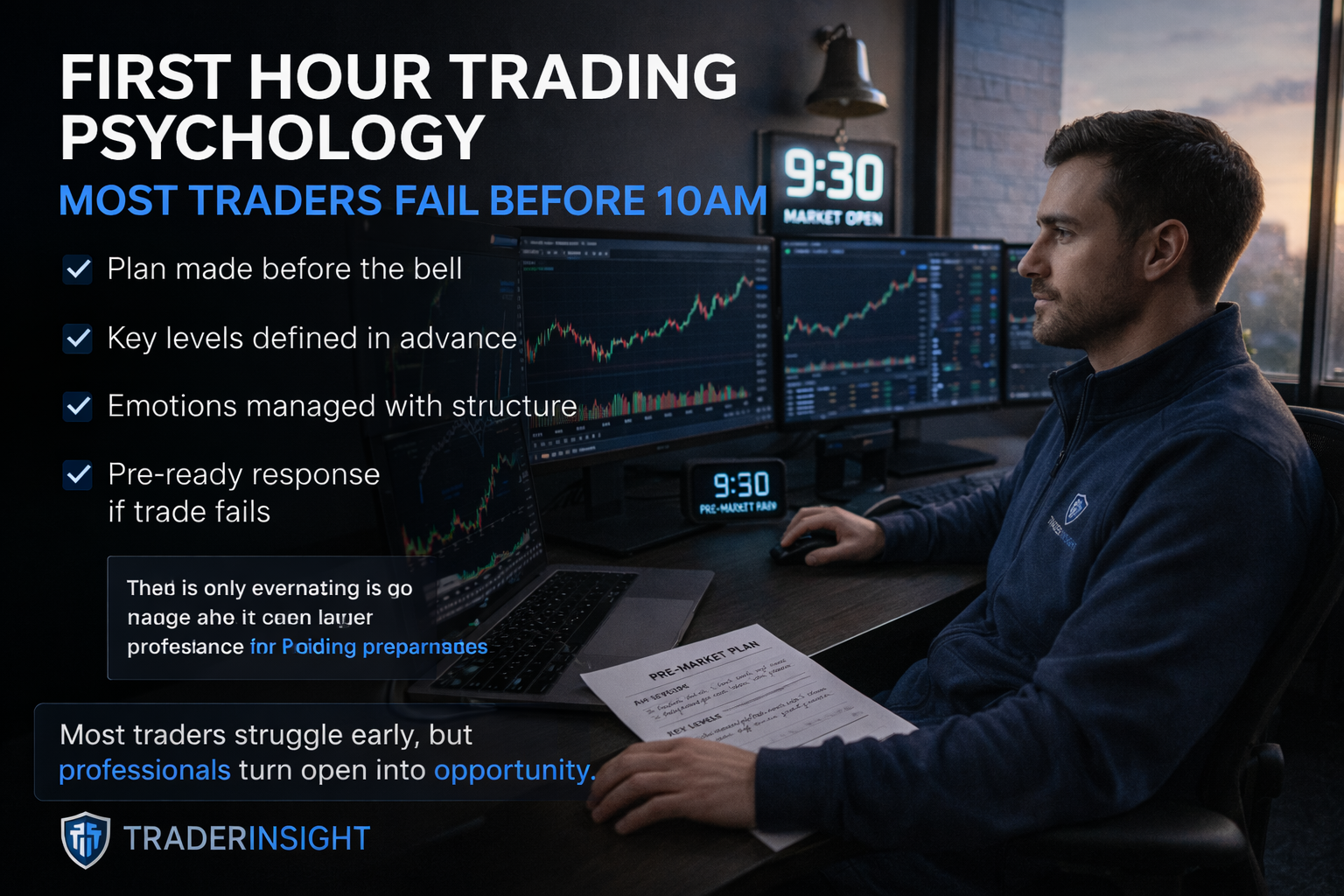
Why the opening hour exposes every weakness in a trader’s process—and how professionals handle it differently
The first hour of the trading day offers some of the biggest opportunities in the market.
It also creates some of the biggest mistakes.
If you want to understand first hour trading psychology, you have to understand what makes the open so difficult.
The market is moving fast. Volatility is elevated. Emotions are high. News is fresh. Gaps are in play. And traders feel like they have to act immediately or miss the day.
That combination is exactly why so many traders fall apart early.
Why the First Hour Feels So Intense
The opening hour is not just another part of the session. It compresses uncertainty, speed, and pressure into a very short window.
That is what makes first hour trading psychology so important.
During the first hour, traders are often dealing with:
- overnight news and market gaps
- fast-moving price action
- fear of missing the best move of the day
- impatience to make something happen early
- pressure to recover quickly if the first trade fails
In that environment, small weaknesses get exposed very quickly.
Why Most Traders Fail Before 10AM
Most traders do not fail before 10AM because there are no opportunities.
They fail because the open magnifies every flaw in their process. This is the core of first hour trading psychology.
- If a trader lacks preparation, the open feels chaotic.
- If a trader lacks structure, the open becomes reactive.
- If a trader lacks execution discipline, the open becomes emotional.
And because the first hour moves quickly, there is less time to recover from those mistakes.
The Open Punishes Uncertainty
The first hour is especially hard on traders who are unclear. If you do not know:
- what setup you want
- where you are entering
- where you are wrong
- what invalidates the idea
- what your maximum risk is
then the opening hour will feel overwhelming.
That is why first hour trading psychology connects so directly to trading preparation psychology. Calm at the open is usually built before the bell rings.
Speed Increases Emotional Errors
At the open, traders do not have the luxury of slow decision-making. That is not necessarily a problem for prepared traders.
But for reactive traders, speed turns small hesitation into big mistakes. They chase entries. They widen stops. They grab profits too early. They take a second trade to repair the first one.
This is why first hour trading psychology is so important. The open does not create bad habits. It reveals them.
Cognitive Load Is Highest at the Open
The first hour also creates a cognitive load problem.
Traders are trying to process too much at once:
- gap direction
- market tone
- sector strength
- watchlist movement
- news flow
- entries and exits
If the process is not simple, the trader starts to freeze or force action.
That is why first hour trading psychology ties closely to cognitive load in trading. Simplicity is not optional at the open. It is a performance tool.
What Professionals Do Differently in the First Hour
Professional traders do not approach the open hoping to figure it out live.
They come in with structure.
That usually means:
- a short list of high-quality opportunities
- clear levels mapped in advance
- predefined entries, stops, and targets
- if-then responses for common scenarios
- risk already determined before the bell
This is why first hour trading psychology is less about emotional toughness and more about preparation and design.
Professionals do not simply feel calmer. They have fewer unresolved questions when the open begins.
The First Trade Can Shape the Entire Day
The first trade often carries outsized emotional weight.
A loss can trigger urgency. A win can trigger overconfidence. A missed move can trigger frustration.
That is why first hour trading psychology is not just about setups. It is about what happens immediately after the first important moment of the day.
Prepared traders already know how they will respond.
Reactive traders improvise.
How to Improve First Hour Performance
1. Prepare Before the Open
Know your setups, levels, and risk before the market opens.
2. Simplify Your Process
Reduce symbols, indicators, and variables during the opening hour.
3. Predefine Your Response to Common Problems
Examples:
- If I miss the entry, I do not chase
- If the first trade loses, I pause before acting again
- If the setup is not there, I do nothing
4. Judge Success by Execution
This is where trading execution discipline matters most. A well-executed first hour builds confidence and consistency.
5. Use Better Structure, Not More Willpower
The open moves too fast to rely on self-control alone. That is why trading structure over discipline matters so much in the first hour.
The Real Opportunity of the First Hour
The first hour is not just where mistakes happen.
It is also where edge becomes visible.
When traders are prepared, clear, and structured, the open can become one of the most productive parts of the day.
That is why first hour trading psychology matters so much. The opening hour rewards clarity and punishes confusion.
The Bottom Line
First hour trading psychology explains why so many traders fail early in the day.
They are not necessarily using bad strategies.
They are entering the most demanding part of the session without enough clarity, structure, or preparation.
That is a hard way to trade.
Final Thought
If your worst mistakes happen early, do not just ask: What went wrong after the bell?
Ask: What was missing before the bell? That is usually where the real answer lives.
Trade with Us
If you want to see what strong first hour trading psychology looks like in real time…
Where trades are planned before the open,
Key levels are mapped in advance,
And the first hour is approached with clarity instead of chaos—
You’ll quickly see:
The traders who do best at the open are usually the most prepared before it begins.
War-Driven Market Opportunity
War Profits and Market Rotation: How Defense Spending Is Driving Stock Market Opportunity
While most traders focus on headlines, professionals focus on where capital is flowing. And right now, one of the clearest flows in the market is coming from a source many traders overlook:
War-driven spending.
The current conflict involving Iran has accelerated global defense spending, and the result is already showing up in stock prices, sector rotation, and trading opportunities.
The Business of War Is Scaling Fast
Recent developments show that the United States is not just engaged in military operations—it is ramping up production at an extraordinary pace.
Major defense contractors have reportedly committed to significantly increasing the output of weapons systems, ranging from missile platforms to advanced aircraft and drone technologies. This is not a theoretical demand. It is active, funded, and expanding.
Global defense spending has already surged, with projections indicating U.S. military budgets will reach $1.5 trillion in the coming years. That kind of capital does not sit still. It moves into contracts, production pipelines, and ultimately into the stock prices of the companies supplying that demand.
This is the essence of war-driven market opportunity.
Where the Money Is Flowing
The biggest beneficiaries of this environment are some of the world’s largest defense contractors. These companies are directly tied to weapons systems, logistics, and advanced military technology.
Recent price action reflects that reality:
- Defense contractors are seeing steady stock price appreciation
- Backlogs are growing into the tens of billions of dollars
- Production expansion driven by geopolitical demand
This is not a short-term spike. It is a structural shift in spending priorities.
As we have discussed in the TraderInsight Article Archives, sustained capital flows tend to create repeatable trading opportunities—not just one-off events.
The Weapons Behind the Trend
The scale of the current conflict is reflected in the range of systems being deployed:
- Long-range cruise missiles and strike systems
- Advanced stealth aircraft and bomber platforms
- Missile defense systems such as Patriot and THAAD
- Drone technology, including low-cost expendable systems
- Surveillance and electronic warfare capabilities
Each of these categories represents a different segment of defense spending—and a different stream of revenue for contractors.
That diversification is one of the reasons war-driven market opportunities tend to persist rather than fade quickly.
The Power Players: Who Is Profiting from Defense Spending
To fully understand war-driven market opportunity, you have to know where the money is going. The largest defense contractors in the United States sit at the center of this capital flow, supported by long-term government contracts, rising global demand, and expanding production pipelines.
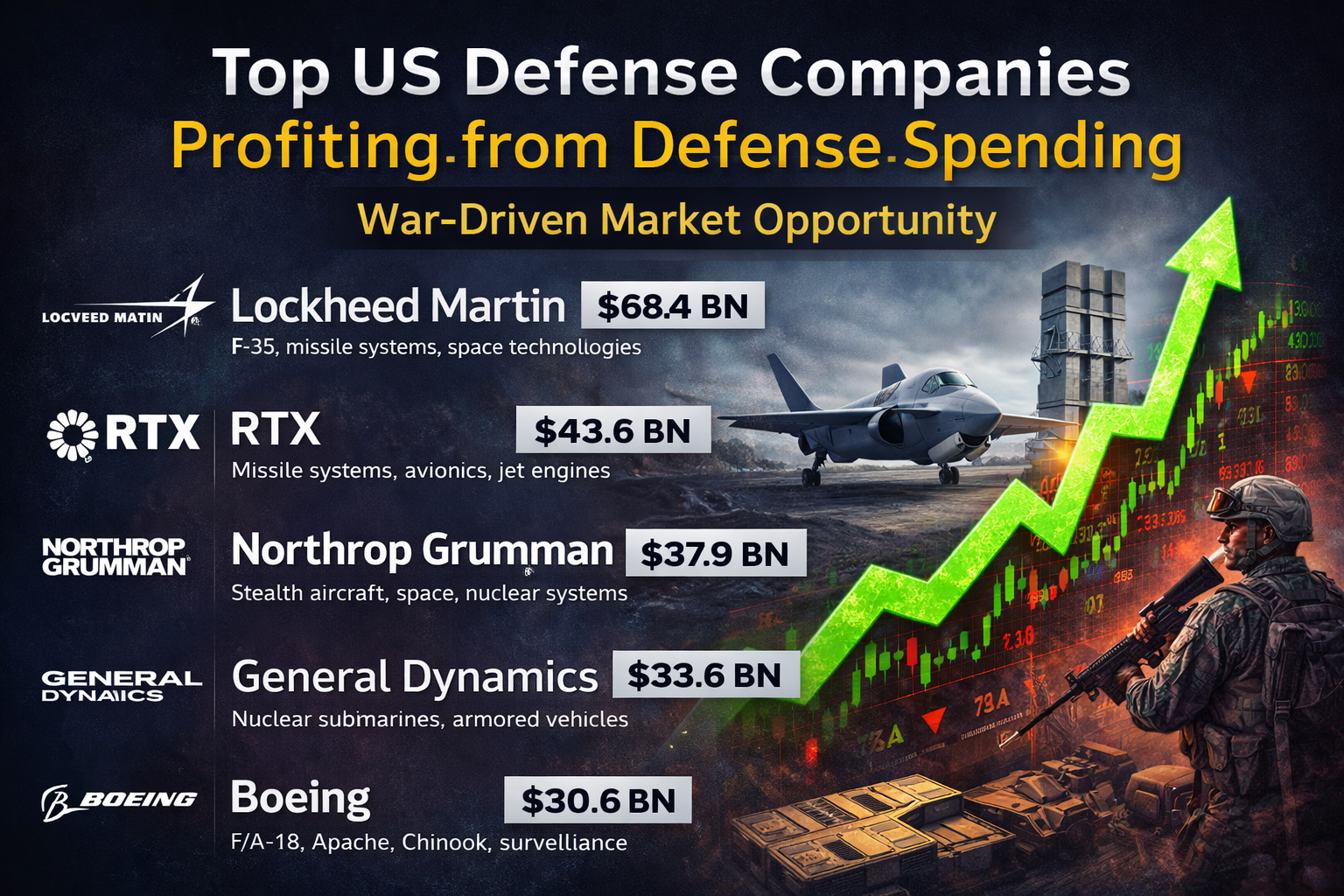
Here are the top five U.S. defense companies driving this trend:
- Lockheed Martin
The world’s largest defense contractor, formed in 1995 through a merger of Lockheed and Martin Marietta. In 2024, it generated $68.4 billion in revenue. The company produces advanced aircraft like the F-35, missile systems, and space technologies. Its Department of Defense contracts are worth tens of billions of dollars, and it continues to expand production of advanced air defense systems such as the PAC-3. - RTX
Formed in 2020 through the merger of Raytheon and United Technologies, RTX focuses on missile systems, jet engines, and avionics. In 2024, $43.6 billion of its revenue came from defense-related operations, making it a major beneficiary of rising military demand. - Northrop Grumman
A leader in stealth technology and advanced military systems, Northrop Grumman manufactures aircraft such as the B-21 Raider and provides key components for space and nuclear modernization programs. The company generated $37.9 billion in defense revenue in 2024. - General Dynamics
Known for its work in submarines, armored vehicles, and military systems, General Dynamics also produces Gulfstream business jets. In 2024, it generated $33.6 billion in defense-related revenue, driven by global demand for military infrastructure. - The Boeing Company
While widely known for commercial aviation, Boeing plays a major role in defense through aircraft such as the F/A-18 Super Hornet, Apache helicopters, and surveillance platforms like the P-8 Poseidon. In 2024, it generated $30.6 billion in defense revenue.
These companies are not just reacting to current events—they are positioned at the center of a long-term expansion in global defense spending.
As outlined in the broader analysis of the Iran conflict and defense sector growth, rising military demand is driving record backlogs, increased production commitments, and sustained upward pressure on defense-related equities.
This is a key component of war-driven market opportunity: identifying where large, persistent flows of capital are being directed—and aligning your trading strategy with those flows.
Stock Market Reaction: What We’re Seeing Now
Markets are already reacting to this shift in real time.
Defense-related equities have been pushing higher, supported by:
- Increased government contracts
- Expanded production commitments
- Long-term spending visibility
At the same time, other sectors—such as transportation and travel—have shown relative weakness, reflecting the broader economic impact of geopolitical tension.
This is classic rotation.
And rotation is where traders find opportunity.
Why Traders Miss This Move
Most traders approach geopolitical events incorrectly.
They focus on:
- Who is winning or losing the conflict
- What the political outcome might be
- How long will the situation last
But the market does not reward those questions.
The market rewards one question:
Where is capital moving right now?
That is why a war-driven market opportunity is often missed. It requires a shift away from narrative and toward flow.
We have emphasized this repeatedly in our work, including discussions on capital rotation and volatility in the article archives.
How This Translates Into Trades
From a trading standpoint, this environment creates several types of opportunities:
- Momentum trades in defense stocks benefiting from new contracts
- Gap opportunities following overnight geopolitical developments
- Sector rotation trades between defense, energy, and risk-sensitive industries
- Volatility-based setups as news flow accelerates price movement
These are not random moves. They are structured responses to capital entering specific market segments.
As we have shown in multiple TraderInsight studies, the first hour of trading is often where these imbalances become most actionable.
The Bigger Picture
Global defense spending is not just increasing—it is accelerating.
With NATO countries committing to higher budget allocations and ongoing conflicts driving demand for replenishment and expansion, the flow of capital into defense is likely to remain a dominant theme.
That means a war-driven market opportunity is not just a short-term trade. It may be an ongoing framework for understanding sector leadership in the months ahead.
Bottom Line
The current geopolitical environment is reshaping capital flows across the market. Defense contractors are benefiting from rising demand, expanding budgets, and long-term production commitments.
For traders, the takeaway is simple:
Do not trade the war. Trade the money flowing because of the war.
That distinction is where the edge lives.
Explore more insights: